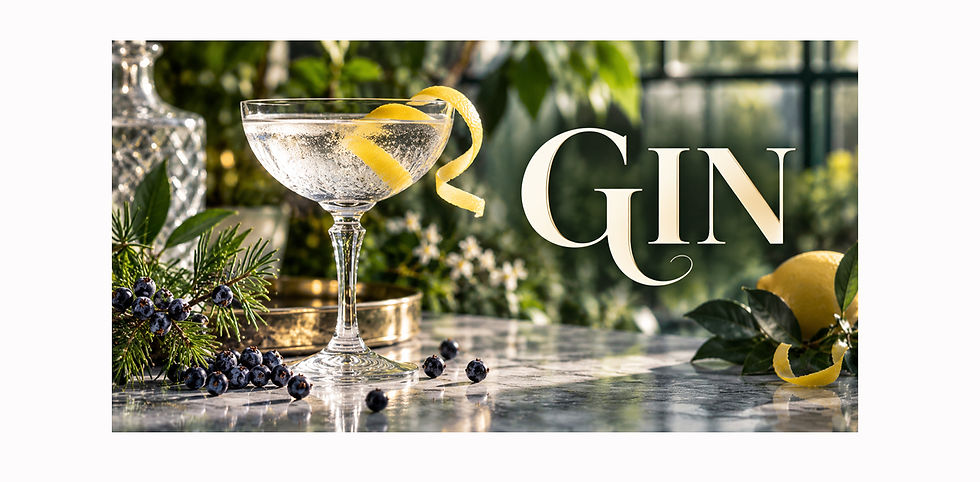


Голландия произвела женевер (также пишется как женевер), и именно это попытались воспроизвести англичане.
Технически можно сказать, что джин был первой ароматизированной водкой.
Джин давался голландским солдатам с прозвищем «Голландская храбрость».
Вильгельм Оранский привез женевер из Голландии в Англию.
В джине используется много трав и растительных компонентов, но ягоды можжевельника придают преобладающий аромат.
Первый коммерческий джин в Англии назывался Old Tom. Это был сладкий джин, очень похожий на Женевер.
В 1700-х годах англичанам разрешили производить джин без лицензии.
Джин можно приготовить в любой точке мира.
Джин был оригинальным базовым спиртом, используемым в мартини. Изображение бокала для мартини является самым культовым символом коктейльной культуры во всем мире. Другие популярные коктейли с джином включают Tom Collins, Singapore Sling, Negroni, Ramos Gin Fizz, Gimlet и Monkey Gland.
Типы джина
Джин можно производить в любой точке мира, но известные страны, производящие его, включают США, Японию, Францию, Испанию, Швецию, Канаду, Шотландию и Германию, а также Африканский континент. Существует четыре категории джина: Genever, London Dry (или просто Dry), Plymouth и New Western.
Женевер (Женевер)
Женевер был первым изобретен в Голландии. Имеет сладкий, солодовый вкус. Женеверы делятся еще на четыре категории: Oude, jonge, korenwijn и graajenever. Oude и jonge могут производиться и продаваться только в Голландии и Бельгии.
Щелкните здесь , чтобы просмотреть презентацию Genever на SlideShare.
Лондон Драй (Сухой)
Большинство людей думают об этом, когда упоминается джин. Популярными брендами являются Bombay, Beefeater и Tanqueray. Вкус чистый и сухой, хорошо смешивается в коктейлях.
Плимут
Эта категория предназначена для gin produced в Плимуте, Англия. Сегодня в городе производится только один джин, и он называется Плимут. Вкус ароматный, землистый и фруктовый.
Новый вестерн
Эти новые джины появились на рынке в начале нового тысячелетия. Большинство из них попадут в категорию «сухих», и можжевельник, кажется, находится на заднем конце, а не на переднем. Примеры включают Hendrick's, Aviation American и Martin Miller.
Интересные факты о джине
Джин — это просто водка после первой перегонки. Травы и растительные компоненты добавляются во время второй дистилляции. Справедливо сказать, что джин – это ароматизированная водка.
Возделывается можжевельник почти ноль ; его в основном собирают в дикой природе.
Сегодня Филиппины потребляют больше джина, чем любая страна мира (25 миллионов ящиков в год).
Самая известная цитата о мартини принадлежит американской поэтессе и писательнице Дороти Паркер: «Мне нравится мартини, максимум два; три, я под столом, четыре, я под хозяином!»
Самый дорогой джин Watenshi стоит 2500 долларов за бутылку. Бутылки наполнены испарениями (Доля Ангела). Чтобы заполнить одну бутылку, требуется сто дистилляций.
11 февраля 2016 года The New World Trading Company в Великобритании провела крупнейшую дегустацию джина с участием 796 участников. В нем участвовало девять баров.
В 2018 году Snoop Dog произвел самый большой джин и сок для мирового рекорда Гиннеса.
Я представил сезонное/зимнее меню Aviation American Gin 2019 года в баре Bourbon O Jazz Bar на Бурбон-стрит в Новом Орлеане.
Gin Timeline
From a 13th-century Dutch medicine cabinet to a London public health crisis to
Snoop Dogg's giant cocktail, here's gin history laid out in order — proof that no spirit has had a more dramatic career change than a little juniper berry.
13th century — One of the earliest known written references to juniper-based medicinal tonics appears in Jacob van Maerlant's Dutch work Der Naturen Bloeme.
Late 1500s — The Dutch begin producing jenever (genever), the malty,
juniper-flavored spirit that will eventually inspire English gin.
1575 — The Bols family establishes a distilling business in Amsterdam, one of the earliest and most enduring genever houses.
Mid-1600s — Hundreds of small distilleries are operating throughout the Netherlands. Jenever is firmly part of Dutch drinking culture.
1689 — Dutch-born William of Orange becomes King William III of England. His government discourages imported French brandy and encourages domestic gin production.
Early 1700s — Gin becomes cheap, plentiful, and barely regulated. London's Gin Craze begins, associated with poverty, crime, and public disorder.
1736 & 1751 — Parliament passes the Gin Act of 1736 and the Gin Act of 1751, attempting to control London's gin crisis.
1751 — William Hogarth publishes his engraving Gin Lane, capturing the era's grim reputation.
1820s–1830s — Gin's image transforms with the arrival of London's glamorous gin palaces — bright lighting, mirrors, and elaborate interiors.
Late 1800s — Old Tom Gin appears in early American cocktail books. The Martinez, an important predecessor of the Martini, combines gin and vermouth.
1888 — New Orleans bartender Henry C. Ramos creates the Ramos Gin Fizz.
1920–1933 — American Prohibition drives gin production underground, giving rise to the term "bathtub gin."
1930s–1940s — After Repeal, Hollywood glamorizes gin cocktails, especially the Martini.
2000s–2010s — The modern craft-gin revival takes off. Gin entries at the International Wine & Spirit Competition increase 200% between 2013 and 2016 alone.
2018 — Snoop Dogg helps create a record-breaking giant Gin & Juice at the BottleRock Napa Valley festival.
Историки джина обнаружили, что оздоровительные тонизирующие средства на основе можжевельника впервые упоминаются в голландской книге Der Naturen Bioemementions 1269 года Якоба ван Мерланта те Дамме.
В 1575 году Лукас Булсиус сменил фамилию на Болс, переехал в Амстердам и открыл собственную винокурню. Это был любимый напиток британских войск, находившихся в Нидерландах во время голландской войны за независимость (1567–1609). Они дали ему прозвище: Голландское мужество. В 1600 году Болс заработал репутацию и был предпочтительным поставщиком могущественной голландской Ост-Индской компании. Это дало ему первые бабки на специи и травы, чтобы сделать свой женевер. Дженевер упоминается в английской пьесе 1623 года «Герцог Миланский». К середине 1600-х годов действовали сотни небольших голландских винокурен по производству джина.
Петр Блоуэр, голландский эмигрант (самоизгнанный), приготовил женевер по особому рецепту на Барбадосе. В 1637 году он привез оборудование для винокурни и саженцы тростника из Бразилии.
В 1672 году Вильгельм Оранский (из Голландии) стал королем Англии. Уильям сильно повлиял на широкое производство джина в Англии, облагая налогом импортные спиртные напитки, а затем разрешил любому производить джин без лицензии, что привело к тому, что дистилляторы использовали нечистую воду и токсичные, некачественные ингредиенты. Джин был самым дешевым напитком в городе, и его стали обвинять в росте преступности, социальных проблемах, несчастных случаях и множестве смертей. Лондон превратился в криминальные трущобы, наполненные пьяницами. Все это привело к «Gin Craze», «Gin Lane», «Gin Act 1736» и «Gin Act 1751». В 1721 году четверть Лондона используется для производства и продажи джина. Производится почти два миллиона галлонов.
Между 1825 и 1829 годами в роскошном стиле открылись первые роскошные лондонские дворцы джина. Чарльз Диккенс писал о них в 1836 году, назвав их «совершенно ослепительными по сравнению с тьмой и грязью, которые мы только что оставили».
В 1862 году американский бармен и писатель Джерри Томас опубликовал первый известный рецепт джина Мартини под названием Мартинес в первой известной книге коктейлей. Джин, указанный для мартини, был Old Tom. В 1888 году владелец бара в Новом Орлеане Чарльз Рамос создал самый популярный в городе коктейль из джина Ramos Gin Fizz. Он также призывал к джину Old Tom .
Во время американского сухого закона (1920–1933) мафиози делали джиноподобный самогон, добавляя в нелегальный самогон сушеные ягоды можжевельника, а к 1940-м годам джин был преобразован в гламурный дух с помощью голливудских кинозвезд и фильмов.
Фото с сайта Aviationgin.com

Всеобщее достояние

Всеобщее достояние

Всеобщее достояние
Fun Gin Facts
Gin and vodka are close cousins. Many gins begin with a neutral spirit much like vodka. The difference comes when juniper and other botanicals are introduced to give gin its distinctive flavor.
Think of vodka as showing up naked. Gin accessorizes.
Juniper berries aren't actually berries. Botanically speaking, they're the fleshy seed cones of the juniper plant.
So gin has been lying to us about the berries this entire time.
Most juniper used for gin is wild-harvested rather than commercially farmed. Pickers gather the tiny cones from naturally growing juniper shrubs, particularly throughout Europe.
Imagine explaining your occupation at a party: “I pick gin berries.”
The Philippines has historically been the world's largest national gin market. Gin is enormously popular there, particularly the locally produced Ginebra San Miguel. Apparently, England started the Gin Craze, and the Philippines said, “We'll take it from here.”
Gin can be made from some surprising things. The base alcohol can originate from grains, grapes, potatoes, sugar beets, or other fermentable agricultural ingredients. What makes the finished spirit gin is its botanical character—most importantly, juniper. There is no official botanical limit. Gin makers can experiment with citrus peels, coriander, cucumber, flowers, tea, peppercorns, herbs, spices, seaweed, and countless other ingredients.
Basically, gin distillers are the people who look around the garden and think, “I wonder what that tastes like at 80 proof.”
One of the world's most extravagant gins is Watenshi. Cambridge Distillery produces it by capturing extraordinarily small quantities of spirit normally lost during distillation. Watenshi has recently been priced at about £3,000 ($4,000) per bottle.
At that price, I'm going to need you to measure my Gin & Tonic with an eyedropper.
The Guinness World Record for the most expensive bottle of gin has belonged to MORUS LXIV. A bottle sold in London in 2018 for £3,800, approximately $4,888 at the time.
And suddenly the well gin doesn't look so bad.
Gin doesn't have to come from England. Unlike geographically protected spirits such as Cognac, gin can be produced around the world. Today you'll find excellent examples from Japan, Spain, Germany, the United States, Australia, South Africa, Sweden, and many other countries. International gin competitions now recognize producers from all over the globe.
London Dry Gin doesn't have to be made in London. “London Dry” refers to a production style, not an address.
London would probably like a word with whoever came up with that naming system.
Navy-strength gin is seriously strong. It's traditionally bottled at about 57% ABV. The style is associated with the British Royal Navy and the strength at which spilled spirit could still allow gunpowder to ignite.
That's one way to conduct quality control.
Gin nearly lost its cool—and then came roaring back. The modern craft-gin revival exploded in the 2000s and 2010s. At the International Wine & Spirit Competition, gin entries increased 200% between 2013 and 2016 alone.
In 2018, Snoop Dogg helped make a record-breaking Gin & Juice. Snoop Dogg, Warren G and others created an enormous cocktail at the BottleRock Napa Valley festival using gin, juice, and a giant drinking vessel. Because apparently a regular Gin & Juice wasn't Snoop enough.
The Martini glass became an international shorthand for “cocktail.” You see its V-shaped silhouette on bar signs, cocktail menus, neon lights, logos, invitations, and cocktail-hour graphics around the world—even when there isn't a Martini anywhere in sight.
It's basically the cocktail world's version of the peace sign.
Types of Gin
Gin is now made around the world, and today's bottles don't always fit neatly into four boxes. But these are some of the major styles worth knowing:
Genever (Jenever)
The Dutch ancestor of modern gin. Genever generally has a richer, maltier character than London Dry Gin and can taste closer to a meeting between gin and whiskey.
Traditional classifications include jonge, oude, and korenwijn. And confusingly, jonge and oude don't simply mean the genever is young or old—they refer primarily to the style and production method.
Apparently, ordering Dutch liquor required a vocabulary test.
London Dry
This is the classic gin profile most people recognize: dry, crisp, botanical, and juniper-forward. Familiar examples include Beefeater, Tanqueray, and Bombay Sapphire.
And despite the name, London Dry Gin does not have to be made in London. “London Dry” describes how the gin is produced, not its mailing address.
Plymouth Gin
Unlike London Dry, Plymouth Gin is geographically tied to Plymouth, England. Today, Plymouth Gin is the best-known—and historically defining—example of the style. It tends to be softer and earthier than a traditional London Dry, with less aggressive juniper.
Old Tom
A historic style that is generally a little sweeter and rounder than London Dry. Old Tom nearly disappeared during the 20th century before the craft-cocktail revival brought it back.
Bartenders started digging through old cocktail books and realized we'd misplaced an entire gin.
Contemporary / New Western Gin
Beginning around the turn of the 21st century, distillers increasingly produced gins in which juniper shared the spotlight with other botanicals. Citrus, cucumber, flowers, herbs, and spices could become much more prominent.
Hendrick's and Aviation helped popularize this modern approach.
Juniper is still there—it just finally learned how to share the microphone.