

L'Olanda ha fatto genever (scritto anche jenever), e questo è ciò che gli inglesi hanno cercato di replicare.
Tecnicamente, si può dire che il gin sia stata la prima vodka aromatizzata .
Il gin veniva dato ai soldati olandesi con il soprannome di "coraggio olandese".
Guglielmo d'Orange portò genever dall'Olanda in Inghilterra.
Molte erbe e prodotti botanici sono usati nel gin, ma la bacca di ginepro conferisce il sapore predominante.
Il primo gin commerciale inglese si chiamava Old Tom. Era un gin dolce molto simile a genever.
Nel 1700, gli inglesi potevano fare gin senza licenza.
Il gin può essere prodotto in qualsiasi parte del mondo.
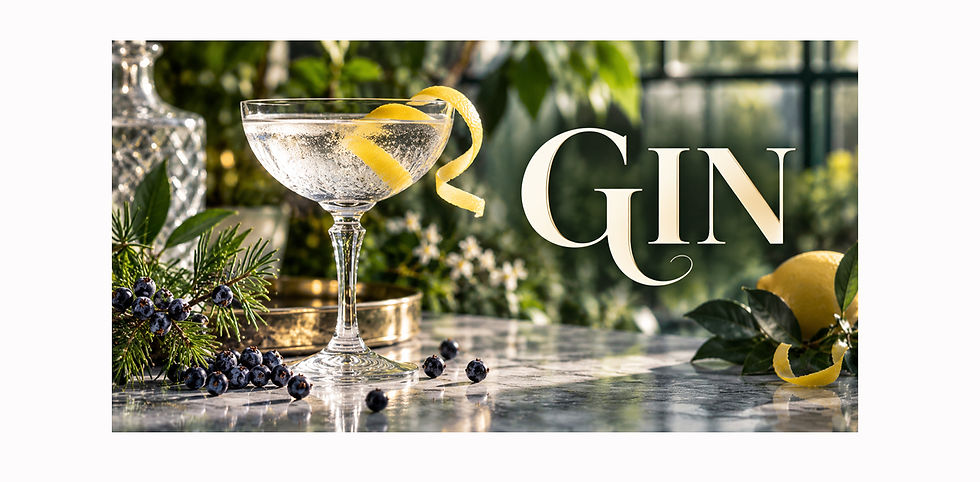
Il gin era lo spirito base originale utilizzato nel Martini. L'immagine del bicchiere da Martini è il simbolo della cultura del cocktail più iconico al mondo. Altri cocktail di gin popolari includono Tom Collins, Singapore Sling, Negroni, Ramos Gin Fizz, Gimlet e Monkey Gland.
Tipi di gin
Il gin può essere prodotto in qualsiasi parte del mondo, ma i principali paesi che lo producono includono Stati Uniti, Giappone, Francia, Spagna, Svezia, Canada, Scozia e Germania, così come il continente africano. Esistono quattro categorie di gin: Genever, London Dry (o semplicemente Dry), Plymouth e New Western.
Genever (Jenever)
Genever è stato il primo inventato in Olanda. Ha un sapore dolce, maltato. I Genevers si suddividono in altre quattro categorie: Oude, jonge, korenwijn e graajenever. Oude e jonge possono essere prodotti e venduti solo in Olanda e Belgio.
Fare clic qui per visualizzare una presentazione genever su SlideShare.
London Dry (secco)
La maggior parte delle persone pensa a questo quando viene menzionato il gin. I marchi famosi sono Bombay, Beefeater e Tanqueray. Il gusto è pulito e asciutto e si sposa bene nei cocktail.
Plymouth
Questa categoria è per gin prodotto a Plymouth, in Inghilterra. Oggi la città produce un solo gin e il suo nome è Plymouth. Ha un sapore aromatico, terroso e fruttato.
Nuovo occidentale
Questi nuovi gin sono arrivati sul mercato all'inizio del Nuovo Millennio. La maggior parte di loro rientrerebbe nella categoria di "secco" e il ginepro sembra essere nella parte posteriore anziché nella parte anteriore. Gli esempi includono Hendrick's, Aviation American e Martin Miller's.
Curiosità sul gin
Il gin è solo vodka dopo la sua prima distillazione. Le erbe e le botaniche vengono aggiunte durante la seconda distillazione. È giusto dire che il gin è vodka aromatizzata.
Si coltiva quasi zero ginepro ; è per lo più raccolto in natura.
Oggi le Filippine consumano più gin di qualsiasi altro paese al mondo (25 milioni di casse all'anno).
La citazione più famosa di Martini è della poetessa e scrittrice americana Dorothy Parker: “Mi piace avere un Martini, due al massimo; tre, sono sotto il tavolo, quattro sono sotto il mio ospite!
Il gin più costoso è Watenshi a $ 2.500 a bottiglia. Le bottiglie vengono riempite con l'evaporazione (Angel's Share). Occorrono cento distillazioni per riempire una bottiglia.
L'11 febbraio 2016, il più grande evento di degustazione di gin ha coinvolto 796 partecipanti, ottenuto da The New World Trading Company in tutto il Regno Unito. C'erano nove bar che hanno partecipato.
Nel 2018, Snoop Dog ha realizzato il più grande Gin & Juice per il Guinness World Record.
Ho pubblicato un menu di gin Aviation American stagionale / invernale 2019 al Bourbon O Jazz Bar in Bourbon Street a New Orleans.
Gin Timeline
From a 13th-century Dutch medicine cabinet to a London public health crisis to
Snoop Dogg's giant cocktail, here's gin history laid out in order — proof that no spirit has had a more dramatic career change than a little juniper berry.
13th century — One of the earliest known written references to juniper-based medicinal tonics appears in Jacob van Maerlant's Dutch work Der Naturen Bloeme.
Late 1500s — The Dutch begin producing jenever (genever), the malty,
juniper-flavored spirit that will eventually inspire English gin.
1575 — The Bols family establishes a distilling business in Amsterdam, one of the earliest and most enduring genever houses.
Mid-1600s — Hundreds of small distilleries are operating throughout the Netherlands. Jenever is firmly part of Dutch drinking culture.
1689 — Dutch-born William of Orange becomes King William III of England. His government discourages imported French brandy and encourages domestic gin production.
Early 1700s — Gin becomes cheap, plentiful, and barely regulated. London's Gin Craze begins, associated with poverty, crime, and public disorder.
1736 & 1751 — Parliament passes the Gin Act of 1736 and the Gin Act of 1751, attempting to control London's gin crisis.
1751 — William Hogarth publishes his engraving Gin Lane, capturing the era's grim reputation.
1820s–1830s — Gin's image transforms with the arrival of London's glamorous gin palaces — bright lighting, mirrors, and elaborate interiors.
Late 1800s — Old Tom Gin appears in early American cocktail books. The Martinez, an important predecessor of the Martini, combines gin and vermouth.
1888 — New Orleans bartender Henry C. Ramos creates the Ramos Gin Fizz.
1920–1933 — American Prohibition drives gin production underground, giving rise to the term "bathtub gin."
1930s–1940s — After Repeal, Hollywood glamorizes gin cocktails, especially the Martini.
2000s–2010s — The modern craft-gin revival takes off. Gin entries at the International Wine & Spirit Competition increase 200% between 2013 and 2016 alone.
2018 — Snoop Dogg helps create a record-breaking giant Gin & Juice at the BottleRock Napa Valley festival.
Gli storici del gin hanno scoperto che i tonici per la salute a base di ginepro furono menzionati per la prima volta nel libro olandese del 1269 Der Naturen Bioemementions di Jacob van Maerlant te Damme.
Nel 1575 Lucas Bulsius cambiò il cognome in Bols, si trasferì ad Amsterdam e fondò la sua distilleria jenever. Era una bevanda preferita dalle truppe britanniche che si trovavano nei Paesi Bassi per la Guerra d'Indipendenza olandese (1567–1609). Gli hanno dato un soprannome: Dutch Courage. Nel 1600 Bols si era guadagnato una reputazione ed era un fornitore preferito della potente Compagnia olandese delle Indie orientali. Questo gli diede le prime spezie ed erbe aromatiche per fare il suo jenever. Jenever fu menzionato in un'opera teatrale inglese del 1623 intitolata Il duca di Milano. Centinaia di piccole distillerie di gin olandesi erano in funzione verso la metà del 1600.
Pietr Blower, un emigrato olandese (auto-esiliato) ha preparato una ricetta speciale di jenever alle Barbados. Portò attrezzature per distilleria e piantine di canna dal Brasile nel 1637.
Nel 1672, Guglielmo d'Orange (dall'Olanda) divenne re d'Inghilterra. William ha fortemente influenzato la produzione diffusa di gin in Inghilterra tassando gli alcolici importati e quindi ha permesso a chiunque di produrre gin senza licenza, il che ha portato i distillatori a utilizzare acqua sporca e ingredienti tossici e di qualità inferiore. Il gin era la bevanda più economica della città e iniziò a essere accusato di un aumento della criminalità, problemi sociali, incidenti e molte morti. Londra divenne uno slum del crimine pieno di ubriachi. Tutto ciò ha portato al "Gin Craze", "Gin Lane", il "Gin Act del 1736" e il "Gin Act del 1751". Nel 1721, un quarto di Londra viene utilizzato per la produzione e la vendita di gin. Vengono prodotti quasi due milioni di galloni.
Tra il 1825 e il 1829, i primi sontuosi palazzi di gin londinesi furono aperti con uno stile opulento. Charles Dickens scrisse di loro nel 1836, definendoli "perfettamente abbaglianti in contrasto con l'oscurità e la sporcizia che abbiamo appena lasciato".
Nel 1862, il barista e autore americano Jerry Thomas pubblicò la prima ricetta conosciuta per il gin Martini, chiamata Martinez, nel primo libro di cocktail conosciuto. Il gin indicato per il Martini era Old Tom. Nel 1888, il proprietario del bar di New Orleans Charles Ramos creò il cocktail di gin più popolare della città, il Ramos Gin Fizz. Richiedeva anche il gin Old Tom .
Durante il proibizionismo americano (1920-1933) i mafiosi fecero un grido simile al gin infondendo il chiaro di luna di contrabbando con bacche di ginepro essiccate e, negli anni '40, il gin fu rinnovato in uno spirito glamour con l'aiuto delle star e dei film di Hollywood.
Foto da Aviationgin.com

Dominio pubblico

Dominio pubblico

Dominio pubblico
Fun Gin Facts
Gin and vodka are close cousins. Many gins begin with a neutral spirit much like vodka. The difference comes when juniper and other botanicals are introduced to give gin its distinctive flavor.
Think of vodka as showing up naked. Gin accessorizes.
Juniper berries aren't actually berries. Botanically speaking, they're the fleshy seed cones of the juniper plant.
So gin has been lying to us about the berries this entire time.
Most juniper used for gin is wild-harvested rather than commercially farmed. Pickers gather the tiny cones from naturally growing juniper shrubs, particularly throughout Europe.
Imagine explaining your occupation at a party: “I pick gin berries.”
The Philippines has historically been the world's largest national gin market. Gin is enormously popular there, particularly the locally produced Ginebra San Miguel. Apparently, England started the Gin Craze, and the Philippines said, “We'll take it from here.”
Gin can be made from some surprising things. The base alcohol can originate from grains, grapes, potatoes, sugar beets, or other fermentable agricultural ingredients. What makes the finished spirit gin is its botanical character—most importantly, juniper. There is no official botanical limit. Gin makers can experiment with citrus peels, coriander, cucumber, flowers, tea, peppercorns, herbs, spices, seaweed, and countless other ingredients.
Basically, gin distillers are the people who look around the garden and think, “I wonder what that tastes like at 80 proof.”
One of the world's most extravagant gins is Watenshi. Cambridge Distillery produces it by capturing extraordinarily small quantities of spirit normally lost during distillation. Watenshi has recently been priced at about £3,000 ($4,000) per bottle.
At that price, I'm going to need you to measure my Gin & Tonic with an eyedropper.
The Guinness World Record for the most expensive bottle of gin has belonged to MORUS LXIV. A bottle sold in London in 2018 for £3,800, approximately $4,888 at the time.
And suddenly the well gin doesn't look so bad.
Gin doesn't have to come from England. Unlike geographically protected spirits such as Cognac, gin can be produced around the world. Today you'll find excellent examples from Japan, Spain, Germany, the United States, Australia, South Africa, Sweden, and many other countries. International gin competitions now recognize producers from all over the globe.
London Dry Gin doesn't have to be made in London. “London Dry” refers to a production style, not an address.
London would probably like a word with whoever came up with that naming system.
Navy-strength gin is seriously strong. It's traditionally bottled at about 57% ABV. The style is associated with the British Royal Navy and the strength at which spilled spirit could still allow gunpowder to ignite.
That's one way to conduct quality control.
Gin nearly lost its cool—and then came roaring back. The modern craft-gin revival exploded in the 2000s and 2010s. At the International Wine & Spirit Competition, gin entries increased 200% between 2013 and 2016 alone.
In 2018, Snoop Dogg helped make a record-breaking Gin & Juice. Snoop Dogg, Warren G and others created an enormous cocktail at the BottleRock Napa Valley festival using gin, juice, and a giant drinking vessel. Because apparently a regular Gin & Juice wasn't Snoop enough.
The Martini glass became an international shorthand for “cocktail.” You see its V-shaped silhouette on bar signs, cocktail menus, neon lights, logos, invitations, and cocktail-hour graphics around the world—even when there isn't a Martini anywhere in sight.
It's basically the cocktail world's version of the peace sign.
Types of Gin
Gin is now made around the world, and today's bottles don't always fit neatly into four boxes. But these are some of the major styles worth knowing:
Genever (Jenever)
The Dutch ancestor of modern gin. Genever generally has a richer, maltier character than London Dry Gin and can taste closer to a meeting between gin and whiskey.
Traditional classifications include jonge, oude, and korenwijn. And confusingly, jonge and oude don't simply mean the genever is young or old—they refer primarily to the style and production method.
Apparently, ordering Dutch liquor required a vocabulary test.
London Dry
This is the classic gin profile most people recognize: dry, crisp, botanical, and juniper-forward. Familiar examples include Beefeater, Tanqueray, and Bombay Sapphire.
And despite the name, London Dry Gin does not have to be made in London. “London Dry” describes how the gin is produced, not its mailing address.
Plymouth Gin
Unlike London Dry, Plymouth Gin is geographically tied to Plymouth, England. Today, Plymouth Gin is the best-known—and historically defining—example of the style. It tends to be softer and earthier than a traditional London Dry, with less aggressive juniper.
Old Tom
A historic style that is generally a little sweeter and rounder than London Dry. Old Tom nearly disappeared during the 20th century before the craft-cocktail revival brought it back.
Bartenders started digging through old cocktail books and realized we'd misplaced an entire gin.
Contemporary / New Western Gin
Beginning around the turn of the 21st century, distillers increasingly produced gins in which juniper shared the spotlight with other botanicals. Citrus, cucumber, flowers, herbs, and spices could become much more prominent.
Hendrick's and Aviation helped popularize this modern approach.
Juniper is still there—it just finally learned how to share the microphone.