Best viewed on a desktop, laptop, or tablet.
Top Things to Know about
Cocktail History
Cocktail history doesn't have a clean starting point.
No one knows exactly when humans first decided alcohol tasted better
with something else in it, but we've apparently been experimenting for thousands of years.
Once early civilizations began making mead from honey, beer from grain, and wine from fruit, it didn't take long for someone to think, “You know what this needs?” Herbs, spices, honey, fruits, and medicinal plants were a
dded for flavor, preservation, and supposed health benefits.
In other words, the first mixologist may have been some prehistoric person standing over a clay pot saying, “Trust me, I make this all the time.”
BARS WERE THE ORIGINAL SOCIAL MEDIA
As people began traveling, inns and taverns sprang up along the way, offering the same basics travelers want today: a place to sleep, something to eat, and something to drink.
Public houses—or pubs—became community gathering places where people heard the latest news, exchanged gossip, complained about politics and the weather, flirted, made business deals, told exaggerated stories, and drank.
Basically, the pub was Facebook, Tinder, Yelp, CNN, and the neighborhood group chat—with beer. And unlike your phone, the bartender could cut you off.
SO, WHY IS IT CALLED A “COCKTAIL”?
Nobody knows for certain—and that's where things get wonderfully weird.
Over the years, theories have involved an Aztec princess, a French egg cup, rooster-tail feathers, an old drink called Cock Ale that actually involved a rooster, and even ginger being used to perk up a horse.
Yes, cocktail history gets strange quickly.
The truth is that historians still debate the origin of the word. So when someone confidently tells you exactly where cocktail came from, smile politely.
They weren't there either.
THEN CAME DISTILLED SPIRITS
Distillation changed drinking forever.
References to distilled spirits such as arrack appeared centuries ago, while aqua vitae—Latin for “water of life”—became a common European term for distilled spirits. Over time, regional spirits developed, including Armagnac, whisky, brandy, rum, gin, and others. Apparently, humans discovered how to concentrate alcohol and collectively said, “Well, this changes everything.”
BEFORE COCKTAILS, THERE WAS PUNCH
Long before bartenders were shaking individual Martinis, people commonly drank mixed alcoholic beverages from large communal bowls.
Punches combined spirits with ingredients such as citrus, sugar, water, spices, and other flavorings, and everyone helped themselves from the bowl. Over time, drinking became increasingly individualized. Large shared punches gave way to smaller servings, and taverns began offering more individually prepared mixed drinks. The communal punch bowl was slowly losing its job.
AND THEN THE COCKTAIL GOT A DEFINITION
One of the great milestones in cocktail history came in 1806, when the American newspaper The Balance and Columbian Repository famously defined a cocktail as a stimulating liquor composed of spirits, sugar, water, and bitters. Sound familiar?
That's essentially the blueprint for an Old Fashioned. So after thousands of years of fermenting, distilling, steeping, spicing, sweetening, mixing, and drinking from giant bowls, humanity finally defined the cocktail. And bartenders have been arguing about how to make one properly ever since.
The Top Things to Know About Cocktails
No one knows who invented the cocktail. What we do know is that long before bartenders shook individual drinks, people mixed large batches of punch and served them from communal bowls.
• By the 1600s, punch culture was flourishing, helping pave the way for the individually prepared mixed drinks that followed.
Basically, the cocktail started as a group project.
• No one knows for certain where the word “cocktail” came from either. Historians have chased all kinds of colorful stories over the years. Today, some of the more credible theories link the word to 18th-century horse-trading terminology and early American political satire—but no one has a universally accepted winner.
So if someone at the bar claims to know exactly where the word came from, buy them a drink and ask to see their time machine.
• The word itself slowly worked its way into print. An early printed appearance of cock-tail dates to 1798, while references clearly describing a drink appeared in the early 1800s. Then, in 1806, a New York newspaper gave us the famous definition of a cocktail as a mixture of spirits, sugar, water, and bitters.
In other words: booze + sweet + water + bitters.
We spent the next 200 years making that considerably more complicated.
• The first known British book devoted to mixed drinks appeared in 1827.
• In America, bartender Jerry Thomas published How to Mix Drinks, or The Bon Vivant's Companion in 1862, generally recognized as the first major American bartender's guide. Jerry Thomas became America's first celebrity bartender. Yes, bartenders had influencers before Instagram.
• The Mint Julep is one of America's earliest documented mixed drinks. References to juleps in America go back to the early 1800s, making the Mint Julep one of the country's oldest cocktail traditions.
And somehow we eventually decided it also needed an enormous hat and a horse race.
• Fancy American bars of the 19th and early 20th centuries
were largely male territory. Upscale saloons catered primarily to men, while respectable women were often expected to use separate entrances or designated Ladies' Rooms/Ladies' Bars. Social conventions severely restricted which women could enter the main bar and under what circumstances.
Meanwhile, the average Joe wasn't sitting around debating whether his Martini had been properly stirred. He was drinking beer, cider, wine, or whiskey and getting on with his day.
• The first Golden Age of cocktails flourished during the second half of the 19th century and lasted until Prohibition. Bartenders developed elaborate drinks, professional techniques, specialized tools, beautiful presentations, and increasingly sophisticated cocktail menus.
• Then America passed Prohibition in 1920.
• The Martini became the ultimate symbol of cocktail culture.
Few drinks have achieved its combination of elegance, mystery, argument, and celebrity. Gin or vodka? Shaken or stirred? Olive or twist? Dry or dirty?
It's basically four ounces of liquid surrounded by 150 years of opinions.
• After American Prohibition ended in 1933, cocktails returned to mainstream life. Changing social customs brought more women into bars, while movies and Hollywood celebrities helped transform cocktail drinking into something sophisticated, glamorous, and aspirational.
• From the 1930s through the 1960s, the cocktail became part of American popular culture—from glamorous nightclubs and hotel bars to suburban cocktail parties.
Apparently, there was a time when inviting the neighbors over for cocktails didn't involve everyone staring at their phones.
• Around the turn of the millennium, the seeds of today's Second Golden Age of Cocktails were taking root. Bartenders rediscovered forgotten recipes, fresh ingredients, quality spirits, proper ice, classic techniques, bitters, handmade syrups, and the history of their profession. Suddenly, bartenders weren't just making drinks—they were researching drinks that bartenders had made 150 years earlier.
Everything old became new again, only now it came with a $17 price tag and one enormous ice cube.
• And then there's Tales of the Cocktail. Founded in New Orleans in 2002, Tales of the Cocktail grew into one of the world's most influential annual gatherings for bartenders, spirits professionals, brands, writers, and cocktail enthusiasts, and it spawned cocktail and spirit festivals worldwide.
COCKTAIL TIMELINE
1500s — Before the Cocktail Had a Name
Cocktail history technically starts before the cocktail existed. If you owned a pub, alehouse, tavern, or inn in the 1500s, you weren't just the owner—you were the bartender, restaurant manager, farmer, bookkeeper, stable manager, purchasing department, and probably maintenance.
You might grow your own food, tend animals, make or store alcoholic drinks, keep records, collect money, manage workers, and provide stables for travelers and their horses—the 1500s version of a parking lot. Tavern floors were often covered with sand, and some establishments protected the serving area with a portcullis, a vertical metal gate. Apparently, cutting someone off was easier when you could lower a medieval security gate.
And forget setting a timer for dinner. Some kitchens used a turnspit dog, which walked inside a wheel connected to a roasting spit, slowly turning meat over the fire. So the next time you're weeded behind the bar, remember: at least nobody has asked you to feed the parking lot or put the dog on the rotisserie wheel.
WHAT WERE THE BARS CALLED?
Tavern names weren't terribly different from the British pub names we know today: Beverley Arms, Black Lion, Boar's Head, King's Head, Crane Inn, Devil's Tavern, The George, The Lion, Prospect of Whitby, White Horse, and Ye Olde Mitre.
Apparently, the 1500s formula for naming a bar was: pick an animal, a royal body part, or something mildly threatening.
HOW DID THEY SAY “DRUNK”?
People had plenty of colorful ways to describe someone who'd had a few too many, including aled up, befuddled, bizzled, drinking deep, lion drunk, shattered, shaved, swilled up, wassailed, and whittled.
Five hundred years later, befuddled still sounds pretty accurate.
WHAT WERE THEY DRINKING?
The 1500s helped establish or develop spirits and liqueurs that would eventually become important behind the modern bar, including brandy, cachaça, jenever, mezcal, pisco, and others.
The cocktail hadn't arrived yet, but humanity was clearly gathering the ingredients.
1500
Sugarcane is harvested in Hispaniola, helping lay the groundwork for Caribbean sugarcane spirits and, eventually, rum.
Scotland's King James IV grants the production of aqua vitae—Latin for “water of life.”
An excellent name for liquor, and considerably better marketing than “water that makes you fall down.”
1510
According to the traditional Bénédictine story, a monk creates the herbal liqueur that would become Bénédictine. Today you'll find it in classics such as the Vieux Carré and Bobby Burns.
Proof that monks have contributed much more to civilization than quiet libraries.
1514
King Louis XII of France licenses vinegar producers to distill eau-de-vie—“water of life.”The French clearly agreed with the Scots: if you're going to name distilled alcohol, make it sound medicinal.
1518
Spanish ruler Charles V authorizes the transportation of 2,000 enslaved Africans to Hispaniola to labor in the sugarcane economy.
It's an important and grim part of spirits history: the growth of the Caribbean sugar and rum industries became deeply intertwined with slavery and the transatlantic slave trade.
1525
Amaretto Disaronno is traditionally dated to this period in Italy.
Around the same time, advances in distilling knowledge help spread the production of brandewijn—“burnt wine”—the word from which we eventually get brandy.
1531
Spanish settlers in Mexico distill local fermented agave beverages, helping begin the long evolution toward the spirit we know as mezcal.
Tequila's smoky ancestor has entered the chat.
1533
Sugarcane eau-de-vie develops in Brazil, eventually evolving into what we know today as cachaça. Meanwhile, monks in the Italian mountains are making herbal liqueurs.
1600s — Punch Bowls, Rum & Really Big Parties
This chapter of cocktail history has no cell phones, but it does have Dutch painter Jan Steen, who left behind a surprisingly detailed record of what a 1600s bar actually looked like.
Steen painted wonderfully detailed scenes of everyday tavern life, including Prince’s Day in a Tavern, Tavern Garden, In the Tavern, The Drinker, A Merry Party, and Tavern Scene. Look closely and you'll find jugs, bottles, food, musicians, flirting, laughter, gambling, smoking, animals, children, toys, barrels, messes, birds in cages, and generally questionable behavior. Minus the children, animals, and caged birds, not much has changed.
One of my favorites is Steen's As the Old Sing, So Pipe the Young, which proves people were documenting bad influences long before social media.
EVERYBODY INTO THE PUNCH BOWL
The 1600s were the great age of punch. English sailors and merchants traveling between Europe and India encountered and popularized the drink, traditionally combining spirit, citrus, sugar, water, and spice.
The word punch is traditionally linked to the Hindi word panch, meaning five, for its five basic components. Punch traveled back to Britain, became fashionable with the upper classes, and eventually crossed the Atlantic to America. Wealthy households commissioned elaborate silver punch bowls, cups, and ladles—which apparently were irresistible to thieves.
London court records document people stealing the silverware and sometimes taking the punch right along with it. If you're going to steal the bowl, I suppose it would be wasteful to leave the punch behind.
RUM COMES TO AMERICA
Life for early settlers in America was brutally difficult. They built communities from scratch, grew food, survived harsh winters, and depended on ships from England for supplies. But somehow they still found time to build rum distilleries. Priorities.
Rum became enormously important to the colonial economy and eventually one of early America's most significant spirits.
WHAT WERE THE BARS CALLED?
Some alehouses, pubs, taverns, and inns of the era carried names such as Bear at Bridge-foot, Bull and Bush, Bull and Gate, Grapes, Green Dragon Tavern, Hatchet Inn, The Anchor, The Plough, Red Lion, Seven Stars, Three Nuns, and Trafalgar Tavern.
Once again, the basic naming formula appears to have been:
Animal + Object + Mild Threat = Pub.
HOW DID THEY SAY “DRUNK”?
The 1600s gave us some magnificent drinking slang: beastly drunk, boozed, caught a fox, D and D (drunk and disorderly), dull in the eye, elevated, giggled up, muddled up, on the rampage, seeing double, and my personal favorite:
“Got bread and cheese in one's head.”
I'm bringing that one back.
WHAT WERE THEY DRINKING?
The century saw important developments involving spirits and brands including Bushmills Irish whiskey, Chartreuse, Haig Scotch, rum, jenever, cachaça, and others.
The modern cocktail still hadn't officially arrived—but the liquor cabinet was filling up nicely.
1608
Old Bushmills Distillery was established in Ireland and would become associated with one of the world's oldest licensed whiskey traditions.
Four hundred years later, we're still drinking the product. That's what I call customer retention.
1620
The Mayflower carries alcoholic beverages, including brandy and other spirits, across the Atlantic. The colonists spend their first brutal winter living aboard the ship as supplies rapidly disappear. Imagine crossing the Atlantic in 1620 and discovering someone drank the last of the brandy.
Now there's a reason for a mutiny.
1623
Jenever, the Dutch juniper-flavored spirit that would help inspire gin, is mentioned in the English play The Duke of Milan.
1625
The Haig name becomes associated with Scotch whisky production.
1635
The Portuguese government prohibits the sale of cachaça. The ban is eventually lifted.
History lesson: telling people they can't have their booze rarely makes them want it less.
1637–1644
Distilling equipment makes its way to Caribbean islands including Barbados and Martinique, helping establish the region's growing sugarcane-spirit industry.
Rum is warming up in the bullpen.
1650
To conserve precious storage space aboard ships, Admiral Robert Blake replaces bulky beer rations with brandy.
Less storage. More alcohol. Finally, a government efficiency program everyone could get behind.
1655
Vice Admiral William Penn orders rum to be included in sailors' daily rations.
Today's employee handbook would have several concerns.
1657–1664
Rum distilleries appear in Boston and later on Staten Island, evidence of rum's growing importance in colonial America.
1668
London court records tell us Thomas Carey was found guilty of stealing punch—and the bowl it came in. I'd like to believe he started out stealing the punch and eventually realized, “I'm going to need something to carry this in.”
1674
Harvard University builds its own brewhouse. Because apparently tuition didn't include enough beer.
1676
While visiting India, English physician John Fryer writes about the English making and consuming punch.
1688
William of Orange arrives in England from the Netherlands, and Dutch jenever helps influence Britain's rapidly developing gin culture.
England was about to discover gin. This will go extremely well.
1691
The Nolet family begins distilling in Holland. Centuries later, the family would become associated with Ketel One Vodka. Now that's a family business.
1694 — THE ULTIMATE PUNCH PARTY
On Christmas Day, English naval commander Admiral Edward Russell throws an enormous party for approximately 6,000 guests in Cádiz, Spain.
According to the famous story, a tiled fountain was converted into an enormous punch bowl, hundreds of people were employed to serve the crowd, and a boy in a small boat reportedly floated around the fountain serving punch.
Six thousand guests. Hundreds of staff. A fountain full of punch.
And you thought making drinks for Karen's 50th birthday party was a nightmare.
1695
De Kuyper begins distilling in Holland.
1697
The British develop an elaborate silver punch bowl known as a Monteith, recognizable by its decorative notched rim. Apparently, a regular punch bowl was no longer fancy enough.
1698
In New Jersey, William Laird begins producing applejack for personal use, beginning the story of what would become one of America's most historic apple spirits. Oh, and nine generations later, Lisa Laird introduced the family's Applejack to Tales of the Cocktail. I know, because I was there and we went to all the parties together.
1699 — AND THEN THERE WAS COCK ALE
The Closet of Sir Kenelm Digby Knight Opened includes recipes for wines and ales—including the infamous Cock Ale. And yes, the name means exactly what you're afraid it means.
The preparation involved an actual rooster, along with ale and other ingredients, and versions of the recipe later appeared in 18th-century cookbooks.
Thankfully, cocktail evolution eventually gave us the Martini. Sometimes progress is beautiful.
1700s — Revolution, Rum & a Whole Lot of Gin
By 1700, cocktail history was still a few decades from getting its name, but Colonial America was laying the groundwork—population roughly 275,000, and more than 140 rum distilleries already operating in the colonies.
The colonists also spent much of the century trying to break free from Britain, which kept passing laws and taxes involving everything from wool and currency to molasses and sugar. Eventually came the Boston Massacre, Boston Tea Party, American Revolution, and independence. Apparently, if you want to make Americans angry, start messing with their booze.
After the Revolution, a simple drink called a Sling became popular—spirit, sugar, and water. Add bitters and you had a Bittered Sling, containing essentially the same basic ingredients later associated with the Old-Fashioned.
Cocktails were getting closer.
AMERICA GETS THIRSTY
When the Declaration of Independence was signed in 1776, Madeira was among the wines America's founders famously enjoyed.
The century also brought American whiskey distilleries, carbonated water experiments, vermouth, absinthe, and one of history's greatest inventions: the sandwich.
Finally, something to eat while drinking.
Taverns were also becoming America's community centers. Some even housed early postal services. You could stop in for a drink, hear the latest news, collect your mail, argue politics, and probably learn something about your neighbor you had no business knowing. Basically, the tavern was the Internet with rum.
WHAT WERE THE BARS CALLED?
Names included Bell in Hand Tavern, City Tavern, Fraunces Tavern, Jean Lafitte's Blacksmith Shop, The Dirty Duck, The Green Man, The Crown, The Old Ship, Blue Bell Inn, and Prospect of Whitby.
HOW DID THEY SAY “DRUNK”?
Nobody did drinking slang better than the 1700s.
Benjamin Franklin compiled 228 expressions for drunkenness. It was printed in the Pennsylvania Gazette on January 6, 1737. Some include: addled, cherry merry, cockadoodled, drunk as a wheelbarrow, fuddled up, full as a goat, head full of bees, in the altitudes, lost his rudder, tipsy, and stewed.
Imagine calling in sick:
“I won't be coming in today. I lost my rudder last night and my head is still full of bees.”
WHAT WERE THEY DRINKING?
Names appearing during the century include Appleton Rum, Cruzan Rum, Drambuie, Hennessy Cognac, Gordon's Gin, Laird's Applejack, Jose Cuervo, and others.
The modern backbar was beginning to take shape.
1708
The familiar rhyme “Old King Cole” describes the merry king calling for his pipe, his bowl, and his musicians. Apparently, Old King Cole understood the three essentials of a successful Saturday night.
1712
Richard Stoughton produces and patents his famous Stoughton's Bitters, an important early commercial bitters preparation.
Bitters have entered the timeline. Bartenders everywhere will eventually own seventeen bottles and regularly use three.
1717
The Colt's Neck Inn in New Jersey begins selling the Laird family's applejack.
1718
The French establish New Orleans. This will become very important to cocktail history.
New Orleans hadn't invented the Sazerac yet, but give it a minute.
1721–1726 — LONDON'S GIN CRAZE
By the 1720s, London's relationship with gin had gotten completely out of hand.
Six thousand places to buy gin. And somehow they managed all of this without a liquor-store-locator app.
1727
Eliza Smith publishes The Compleat Housewife, containing recipes for wines, cordials, Milk Punch, and even the infamous Cock Ale, which involved an actual rooster.
Let's just say the farm-to-glass movement was considerably more literal back then.
1732
At Philadelphia's Schuylkill Fishing Company, the famous Fish House Punch develops from a potent combination of rum, peach brandy, lemon, sugar, and water. George Washington would later become an honorary member.
The club's mission was essentially fish, eat, socialize, and drink punch.
Finally, a committee meeting worth attending.
1734–1735
London court records repeatedly mention arrack punch. In one particularly impressive case, two men reportedly consumed four or five bowls of punch plus three pints of wine. Even the court responded: “What! Did you two drink all that?”
When an 18th-century criminal court questions your drinking, you've had a night.
1736
England passes the Gin Act, attempting to curb the country's enormous gin consumption. The British government had officially reached the “Okay, everybody settle down” stage.
1740 — GROG
British Vice Admiral Edward Vernon, nicknamed Old Grog because of the grogram cloak he wore, orders sailors' rum ration diluted with water. Some sources say they also added lime and sugar, producing a mixture remarkably similar to the basic flavor combination of a Daiquiri.
The drink was prepared in a scuttled butt, essentially a wooden cask sailors gathered around. Yes, scuttlebutt eventually became another word for gossip. So even the Navy had a water cooler where everyone drank and talked about coworkers.
1742
An American edition of Eliza Smith's The Compleat Housewife is published, becoming an important early cookbook in Colonial America.
1744 — NOW THAT'S A BAR TAB
Visitor William Black records an extraordinary day of drinking in Philadelphia: cider and punch at lunch, rum and brandy before dinner, more punch and wine with dinner, liqueurs afterward, followed by still more wine, spirits, and punch until bedtime.
He described punch bowls big enough for a goose to swim in.
And somehow the next morning they got up and founded a country.
1745–1749
Drambuie appears in Scotland, while Appleton Rum begins production in Jamaica.
1751
England passes another Gin Act.
Apparently, the first “Everybody settle down” didn't work.
1757–1758
George Washington records a recipe titled “To Make Small Beer,” later campaigns with a barrel of Barbados rum, and Don José Cuervo receives a land grant to cultivate agave in Mexico.
Politics and alcohol were already becoming very comfortable together.
1759
Arthur Guinness signs his legendary 9,000-year lease at St. James's Gate in Dublin.
Nine thousand years. Apparently, Arthur felt pretty confident about the business plan.
1760
George Washington becomes acquainted with Laird's Applejack, while Cruzan Rum begins production in the Virgin Islands.
1765
Richard Hennessy establishes Hennessy Cognac.
A future generation of rappers quietly thanks him.
1769
Gordon's Gin begins production in England, while the Henriod sisters advertise their elixir d'absinthe in Switzerland. The backbar keeps getting better.
1771
Developments in producing carbonated water are documented.
Two words bartenders will eventually know very well: Club soda.
1780
The decade brings a burst of distilling activity: Jacob Beam in Kentucky, John Jameson in Ireland, Elijah Pepper in Kentucky, and developments in charcoal filtration for vodka.
You could say the 1780s were having a spiritual awakening.
1784
Physician and politician Benjamin Rush publishes An Inquiry into the Effects of Spirituous Liquors on the Human Mind and Body, warning about excessive spirit consumption.
After the previous 84 years, somebody probably needed to.
1786
Antonio Carpano creates his famous vermouth in Turin, Italy.
Gin and whiskey don't know it yet, but their future partners have arrived.
1789
The century closes with growing American whiskey production—and the beginnings of the temperance movement.
Alcohol and the people trying to get rid of alcohol were now developing simultaneously. This relationship will continue for quite some time.
1790
Jean-Jacob Schweppe develops commercial production of artificial mineral water.
Hello, bubbles.
1791
George Washington imposes the infamous Whiskey Tax.
The federal government discovers something governments will never forget:
You can tax the booze.
1798 — “COCKTAIL” APPEARS IN PRINT
One of the earliest known printed appearances of the word “cock-tail” is found in London's Morning Post and Gazette. In this usage, historian David Wondrich connects the term to the horse trade—specifically the practice of using ginger to make an older horse appear livelier and cause its tail to rise.
Yes, the leading theory involves putting ginger where the sun doesn't shine.
After nearly 300 years of rum, punch, gin, bitters, applejack, whiskey, vermouth, and enormous communal bowls, the word cocktail had finally appeared.
The 1800s were about to take it and run with it.
1800s — The Cocktail Takes Center Stage
If the previous centuries were cocktail history's rehearsals, the 1800s were opening night
American bartenders became internationally famous. The best dressed like stars in pressed jackets, crisp collars, and diamond tiepins, and bartending was considered something of an aristocracy within the working class. Aspiring bartenders often apprenticed for years before earning their place behind the bar.
Then came ice. Before mechanical refrigeration, people cut harvested pond and lake ice into huge blocks, stored it in insulated icehouses, and eventually shipped it around the world. Suddenly bartenders could chill, shake, stir, and serve drinks over ice.
Add better glassware, new spirits, improved transportation, gas lighting, cocktail shakers, recipe books, and increasingly elaborate bars, and America's First Golden Age of Cocktails was underway. And unlike today, becoming a celebrity bartender did not require an Instagram account.
WHAT WERE THEY DRINKING?
By century's end, a well-heeled customer might order a Cobbler, Crusta, Flip, Champagne Cocktail, Manhattan, Martinez, Old-Fashioned, Ramos Gin Fizz, Sazerac, Smash, Sour, Toddy, Tom & Jerry, or Tom Collins.
The cocktail menu had officially arrived.
WHAT WERE THE BARS CALLED?
Names included Crystal Palace Saloon, Golden Cross, Hustler's Tavern, Jack's Elixir Bar, Knickerbocker Saloon, Iron Door Saloon, McSorley's Old Ale House, Old Absinthe House, Pete's Tavern, The Bucket of Blood, The Cock Tavern, The Imperial Cabinet, Tujague's, and White Horse Tavern.
The Bucket of Blood. I'm thinking reservations weren't required.
HOW DID THEY SAY “DRUNK”?
The Victorians may have dressed formally, but their drinking slang was magnificent.
You could be a couple of chapters into the novel, at peace with the floor, banged up on sauce, drunk as forty billy goats, feeling glorious, full to the brim, lifting the little finger, moistening the clay, sloshed, soaked, tanked, wetting the whistle, or whacked out of one's skull.
My vote goes to:
“I'm not drunk. I'm just a couple chapters into the novel.”
WHAT WAS APPEARING ON THE BACKBAR?
The century brought names still familiar today, including Beefeater, Canadian Club, Cherry Heering, Don Q, Galliano, Grand Marnier, Johnnie Walker, Pimm's No. 1, Rose's Lime Juice, Tanqueray, Lillet, Myers's Dark Rum, and many more.
The backbar was getting crowded.
1803 — COCKTAIL MEANS A DRINK
One of the earliest known American printed references to cocktail as a beverage appears in New Hampshire's Farmer's Cabinet:
A man drinks a cocktail, declares it “excellent for the head,” visits the doctor—and drinks another cocktail. Medical science was different then.
1806 — THE COCKTAIL GETS A DEFINITION
During a New York election, a candidate reportedly handed out an impressive amount of free booze—including rum grogs, brandy, gin slings, bitters, and cocktails.
He lost.
Gain: NOTHING.
A curious reader then asked the newspaper exactly what this mysterious cock-tail was. Editor Harry Croswell answered with the now-famous formula:
Spirit + Sugar + Water + Bitters.
The cocktail finally had a definition.
Bartenders have modified it ever since.
1809
Writer Washington Irving mentions Americans drinking Mint Juleps, Apple Toddies, Cocktails, Stone Fences, and Sherry Cobblers.
1820
Havana's La Piña de Plata opens. A century later, the location becomes famous as El Floridita, forever associated with Daiquiris and Ernest Hemingway.
Around this time, Johnnie Walker begins its long journey toward becoming one of the world's best-known Scotch names.
1821 — ANOTHER COCKTAIL ORIGIN STORY
James Fenimore Cooper's novel The Spy features fictional tavern keeper Betty Flanagan, who is credited with creating the cocktail. The character was reportedly inspired by real tavern keeper Catherine Hustler, and later folklore connected rooster-tail feathers with her drinks.
Is that really where cocktail came from?
Nobody knows. But it's considerably easier to explain at a bar than the ginger-and-the-horse theory.
1823
Pimm's No. 1 begins its story in London, while Sir Walter Scott mentions a Gin Twist made with gin, hot water, lemon, and sugar.
1825 — THE GIN PALACE
Lavish gin palaces begin appearing in London, filled with brilliant lighting, mirrors, elaborate decoration, and polished fixtures—a dramatic contrast to the dark streets outside. Charles Dickens later described them as “perfectly dazzling.”
Basically, the immersive cocktail bar had arrived.
1827 — THE FIRST DRINK BOOK
Oxford University students publish Oxford Night Caps, one of the earliest known books devoted to alcoholic drink recipes. So yes, college students helped advance cocktail literature. Probably the least surprising fact in this entire timeline.
1843
Charles Dickens writes about characters consuming rum toddies, Mint Juleps, Gin Slings, and cocktails. Cocktail culture was officially literary media.
1844
Noilly dry vermouth reaches America through New Orleans.
Somewhere in the future, a Martini is getting very excited.
1850 — THE COCKTAIL SHAKER
One of the earliest known published illustrations of a two-piece cocktail shaker appears in the Illustrated London News.
1852 — THE BRANDY CRUSTA
New Orleans bartender Joseph Santini creates the Brandy Crusta at his bar, Jewel of the South. Its spirit, citrus, sweetener, bitters, and distinctive sugar-crusted rim helped establish a template that would influence generations of cocktails.
New Orleans was warming up.
1853 — BARTENDERS BECOME SHOWMEN
An article in Charles Dickens's Household Words describes American bartenders as artists, acrobats, magicians, and bottle conjurers, tossing bottles and glasses as they worked. So flair bartending wasn't invented in the 1980s.
They just didn't have red-and-white wide vertical striped shirts yet. (think T.G.I.Fridays)
1856 — HELLO, MIXOLOGIST
The word “mixologist” appears in print.
And somewhere, an old-school bartender rolled his eyes for the very first time.
1862 — JERRY THOMAS CHANGES EVERYTHING
Legendary American bartender Jerry Thomas publishes How to Mix Drinks, or The Bon-Vivant's Companion, generally regarded as the first major American bartender's guide. Thomas became America's great celebrity bartender. He traveled, performed spectacular drink-making demonstrations, dressed impeccably, and famously owned solid-silver bar tools. No website. No TikTok. No followers. Just talent and heavy silver bar tools.
Good to Know: 162 years later (2024), the writers of the Palm Royale certainly seem to have a copy of Jerry's Bartender's Guide lying around the writers’ room because cocktails heard, ordered, or spotted so far from his book include the Mississippi Punch, General Harrison’s Egg Nogg, Brandy Shamparelle, and Medford Rum Sour.
1863 — TAKE YOUR PUNCH SERIOUSLY
Cups and Their Customs describes legendary punch maker Billy “Bully” Dawson, who insisted that making great punch required his complete concentration.
Essentially:
Do not talk to me. I'm making punch. Every bartender understands.
1864
George Pullman introduces luxurious railway cars featuring sleeping, dining, and lounge accommodations where travelers could enjoy cocktails.
The road-trip cocktail had arrived—on rails.
Experimental manufactured ice begins in New Orleans.
1867
Lauchlin Rose develops preserved sweetened lime juice, eventually known as Rose's Lime Cordial. Future Gimlets say thank you.
1868
Louisiana Ice Manufacturing Company opens at Tchoupitoulas and Delachaise Streets.
1869
More bartender and drink books appear, including William Terrington's Cooling Cups and Dainty Drinks and Haney's Steward and Barkeepers Manual. Mark Twain also mentions a Champagne Cocktail in The Innocents Abroad.
Cocktails weren't a fad anymore.
They had manuals.
1873 — HERE COME THE STRAWS
At Vienna's World's Exposition, the American exhibit features bartenders making cocktails behind circular bars, while the exposition's Rotunda bar introduces straws in cocktails.
And somewhere, 150 years in the future, someone begins arguing about whether the straw should be paper.
1874
London's Criterion opens with a glamorous American Bar decorated with mirrors and white marble. American cocktail culture had become an export.
Joseph Santini dies. Check out his 10-page Handwritten Succession Inventory from the businesses he left behind.
1874 — MARK TWAIN'S MEDICINE
While traveling in Britain, Mark Twain asks his wife to have Scotch whisky, Angostura bitters, lemons, and crushed sugar waiting when he returns. A surgeon had apparently recommended the mixture for digestion, and Twain was drinking it before breakfast, dinner, and bed.
Three cocktails a day.
Doctor's orders.
1882
Harry Johnson publishes his influential Bartenders' Manual, while an early printed reference to the Manhattan appears in a New York newspaper.
1884 — THE THREE-PIECE SHAKER
E. J. Hauck patents a three-piece cocktail shaker, while a bartender's guide recommends more than 25 different types of glassware for a first-rate saloon.
Twenty-five types of glasses.
And yes, the bartender still had to wash them.
1888 — THE RAMOS GIN FIZZ
New Orleans bartender Henry C. Ramos creates the Ramos Gin Fizz.
The drink eventually became famous for its long, vigorous shake.
In other words, Ramos invented a cocktail and an upper-body workout.
1890s
New Orleans adds another spectacular creation when Jules Alciatore develops Café Brûlot Diabolique, complete with flaming brandy and citrus.
Because apparently simply drinking Cognac wasn't dramatic enough.
1892 — COCKTAILS GET WEIRD
Celebrity bartender William “The Only William” Schmidt publishes The Flowing Bowl. His elaborate recipes use unusual ingredients, extravagant garnishes, and techniques far ahead of their time. If Schmidt were alive today, he'd probably have a reservation-only bar with twelve seats and no sign on the door.
1892 — BOTTLED COCKTAILS
G. F. Heublein begins producing commercial bottled Manhattans and Martinis, boldly advertising:
“A better cocktail at home than is served over any bar in the world.”
Bartenders have been insulted by ready-to-drink cocktails for more than a century.
1897
The Rob Roy is introduced at New York's Fifth Avenue Hotel.
That same year, Dewar's Scotch appears in an early advertising film projected onto a screen in New York City's Herald Square—one of the earliest examples of alcohol advertising on film. Liquor advertising had officially entered the movies.
1898
London's Savoy Hotel opens its famous American Bar, while Boston gives us the Ward 8 cocktail.
1899
Sweden opens its first American Bar.
By the end of the 1800s, American cocktail culture had spread worldwide.
The cocktail had gone from an obscure mixture of spirit, sugar, water, and bitters to an international phenomenon.
Bartenders were celebrities. Cocktail books filled shelves. Specialized tools and glassware filled bars. Great hotels built American Bars. Classics were being invented that we still drink today.
The First Golden Age of Cocktails was in full swing.
Unfortunately, America was about to decide this was all going much too well.
Next stop: the 1900s—and Prohibition.

Punch bowl and stand, made at the Meissen factory, Germany, 1770, Victoria and Albert Museum


A historical tavern in Prague. http://www.czech-tourist-service.eu


1575 painting by Pieter Aertsen | Public Domain

Painting by Jan Steen 1625 | Public Domain

Painting by Jan Steen 1625 | Public Domain

John Harvard | alainedouard [CC BY-SA 3.0 or GFDL , via Wikimedia Commons


New Orleans in 1851. New Orleans has created more cocktails than any city in the world. In the 1800s, some cocktails served during this time include the Roffignac, Brandy Crusta, Cocktail à la Louisiane and Sazerac. Other adopted popular cocktails served include Mint Julep, Old-Fashioned, and Milk Punch. For the wealthy, ice from frozen lake and ponds was also available. Everett Historical / Shutterstock


I found the first known photo of Joseph Santini, creator of the Brandy Crusta, from his great-great-granddaughter, Diane. Italian-born bartender Joseph Santini (1817–1874) created the Brandy Crusta in New Orleans, and the drink became important enough to appear in Jerry Thomas's landmark 1862 book, How to Mix Drinks, or The Bon-Vivant's Companion. Thomas—or perhaps his editor—listed Santini as “Santina.”

My dear friend Lisa Laird, 9th-generation owner of Laird & Company Applejack brandy and the company's first woman owner.

Victor "Trader Vic" Bergeron 1940s. Creator of the Mai Tai.

I found the earliest known photograph of Walter Bergeron, creator of the Vieux Carré, through his great-granddaughter, Tristen. The photograph dates to 1919. Some cocktail historians date Bergeron's creation of the Vieux Carré to 1938, but famed New Orleans bartender Chris McMillian showed me a 1934 Hotel Monteleone cocktail menu with the Vieux Carré already listed—proving the cocktail was being served at least four years earlier. And by the way, I found no relation to Trader Vic Bergeron, creator of the Mai Tai.


1900s — Prohibition, Tiki, Disco & the Cocktail Comeback
The 1900s open one of cocktail history's wildest chapters. The Waldorf-Astoria in New York had set a standard for sophisticated drinking, bartending was considered an art, and beautifully made cocktails were fashionable.
Then came two World Wars, Prohibition, the Great Depression, Hollywood, airplanes, refrigeration, blenders, television,
tiki bars, Playboy Clubs, discos, chain restaurants, flavored vodka, the Internet—and eventually the first sparks of the modern craft cocktail movement.
In other words, cocktails spent the century going from elegant to illegal to glamorous to neon blue—and finally back to elegant again.
WHAT WERE THEY DRINKING?
By the century's end, a customer might order a Flip, Horse’s Neck, Mint Julep Absinthe Drip, Pink Gin, Highballs, Rob Roy, Knickerbocker, Champagne Cocktail, Kir Royale, Brandy Alexander, Martini, Vodka Martini, Between the Sheets, Stinger, Old-Fashioned, Grasshopper, Bellini, Pisco Sour, Pimm’s Cup, Clover Leaf, Sazerac, Gin Fizz, Bronx, Manhattans, Gibson, Buck's Fizz,
Blood & Sand, Negroni, Americano, Hot Toddy, Hot Buttered Rum, White Lady, Pink Squirrel, Monkey Gland, Sidecar, Mimosa, Kangaroo, Vieux Carré, Bacardi Cocktail, Moscow Mule, Dark 'n’ Stormy, Hurricane, Irish Coffee, Tom Collins, Gimlet, Whiskey Sour, Cuba Libre, Bloody Mary, Planter’s Punch, Blue Hawaii, Mai Tai, Zombie, Piña Colada, Daiquiri, Long Island Iced Tea, Tequila Sunrise, Mudslide, White Russian, Black Russian, Rusty Nail, Kir, Jungle Bird, Fuzzy Navel, Sex on the Beach, Midori Sour, Amaretto Sour, Screwdriver, Cape Codder, Seabreeze, Baybreeze, Madras, Greyhound, Salty Dog, Screaming Orgasm, Harvey Wallbanger, Bahama Mama,
Banana Banshee, Miami Vice, Creamsicle, Nuts & Berries, Nutty Irishman, Golden Cadillac, Margarita, Cadillac Margarita, Golden Grand Margarita, Strawberry Margarita, Ward Eight, Woo Woo, Pearl Harbor, Peppermint Patty, Purple Hooter, Presbyterian, Rum Runner, Singapore Sling, Sloe Comfortable Screw, Rum Punch, Freddy Fudpucker, Girl Scout Cookie, Godfather, Godmother,
Alabama Slammer, Bushwhacker, Espresso Martini, Cable Car, Caipirinha, French Martini, Lemon Drop Martini, Jasmine,
Tons of dessert/flavored ‘Tinis, Appletini, and Cosmopolitan.
WHAT WERE THE BARS CALLED?
Names ranged from Sloppy Joe's, Stork Club, Whiskey A Go-Go, Studio 54, Rainbow Room, Coyote Ugly, Angel's Share, Milk & Honey, Cotton Club, The Golden Cadillac, The Oak Room, Cabaret, The Riviera Lounge, Carousel Bar, The Gold Rush, The Famous Door, Tonga Room, Trader Vic's, Paradise Garage, The Fillmore, CBGB, The Roxy Theatre bar, The Palomino Club, Gilley’s Club, Stardust, The Bamboo Room, Mai-Kai, The Velvet Room, The Kit Kat Club, The Playboy Club, Blue Martini Lounge, Viper Room and Velvet Tango Room.
Bar names had officially moved beyond The Red Bucket of Blood.
HOW DID THEY SAY “DRUNK”?
You could be blasted, blitzed, bombed, buzzed, canned, crocked, fried, hammered, liquored up, lit, toasted, wasted, or three sheets to the wind.
Compared with the 1700s' “lost his rudder” and “head full of bees,” I'm not sure this qualifies as progress.
WHAT WAS APPEARING ON THE BACKBAR?
The century brought names including Johnnie Walker (1908), Old Crow, Old Overholt Rye, Four Roses Bourbon, Jim Beam (re-entered the market), Old Grand-Dad Bourbon, Ancient Age Bourbon, Weller's Bourbon, Old Rip Van Winkle, Mount Vernon Rye, Phillips Peppermint Schnapps, Mr. Boston Peppermint Schnapps, Rumple Minze, Hiram Walker Peppermint Schnapps, Maker's Mark (1980s relaunch), Blanton's (first mass-marketed single barrel bourbon), Gordon's Gin, Gilbey's gin, Booth's gin, Beefeater Gin (1900s reintroduction), Wolfschmidt vodka, Popov vodka, Stolichnaya vodka (American introduction), Kahlúa, Baileys Irish Cream, Crown Royal, Smirnoff (for America), Galliáno, Absolut Vodka, Midori, Captain Morgan Spiced Rum, Dekuyper Peachtree Schnapps, Malibu Rum, Woodford Reserve Bourbon, Booker's Bourbon, Basil Hayden Bourbon, Jose Cuervo, Cruzan rum,
DeKuyper Hot Damn! Cinnamon schnapps, Grey Goose vodka, Pappy Van Winkle 20 Year (1994), Pappy Van Winkle 23 Year (1998), Absolut vodka, Absolut Peppar, Absolut Citron, Absolut Kurant, Absolut Mandrin, Tito's Handmade Vodka, SKYY vodka,
Three Olives vodka, Bombay Sapphire gin, Smirnoff Ice, DeKuyper Sour Apple Pucker, Jägermeister and its Ice-Cold Tap Machine, Goldschläger cinnamon schnapps, Del Maguey Vida, Belvedere vodka, Chopin vodka, Ketel One vodka,
Cabo Wabo Celebrity Tequila - Sammy Hagar, Elijah Craig Small Batch, Jefferson's Very Small Batch Bourbon,
THE EARLY 1900s — THE PARTY IS STILL GOING
Cocktail books kept appearing, classic drinks were refined, and American-style cocktails spread around the world.
The Pisco Sour emerged in Peru, while drinks such as the Bamboo, Bronx, Dry Martini, and others entered cocktail culture.
1910 — COCKTAILS TAKE FLIGHT
Paying passengers aboard a Zeppelin flying over Germany are served cocktails.
Humans had barely figured out powered flight and somebody had already asked: “Do you have beverage service?”
1916 — THE COCKTAIL PARTY
One of the earliest recorded American cocktail parties is hosted by Mrs. Julius S. Walsh Jr. in St. Louis. Guests are served Clover Leafs, Highballs, Gin Fizzes, Bronxes, Martinis, and Manhattans.
Finally, drinking several different cocktails in someone's living room had an official name.
1917 — TOM BULLOCK
Although Black bartenders had worked in America for generations, Tom Bullock became the first known African American bartender to publish a cocktail book, The Ideal Bartender.
His book remains an important piece of American bartending history.
1920 — PROHIBITION
Prohibition marks one of cocktail history's most dramatic turning points. On January 16, 1920, nationwide Prohibition begins in the United States, sending America's great bartending tradition underground—or overseas.
Americans who could afford it traveled to Cuba, Mexico, Canada, London, and Paris, where bartenders still legally made drinks.
America essentially said:
“You can't drink here.”
Americans replied:
“Fine. Where's my passport?”
THE 1920s — AMERICAN BARTENDERS GO ABROAD
The decade produced or popularized classics including the Buck's Fizz, Brandy Alexander, Blood and Sand, Negroni, Monkey Gland, Mimosa, and others. Harry MacElhone's famous Paris bar became an international gathering place for drinkers and bartenders.
Prohibition was terrible for American bars—but fantastic for spreading American cocktail culture around the world.
1930s — HOLLYWOOD PUTS A COCKTAIL IN EVERYONE'S HAND
The 1930s add a glamorous new chapter to cocktail history. In 1930, Harry Craddock publishes The Savoy Cocktail Book, one of history's most influential cocktail books.
1933 — PROHIBITION ENDS
On December 5, 1933, nationwide Prohibition finally ends.
Thirteen years.
Worst happy hour ever.
1934 — TIKI ARRIVES
Don the Beachcomber creates the Zombie in Hollywood, helping launch America's fascination with exotic tropical cocktails. Meanwhile, New Orleans gives us the Vieux Carré.
The same year, The Thin Man hits movie screens with Martinis, Bronxes, Knickerbockers, and one of cinema's great cocktail lessons: shake a Manhattan to foxtrot time, a Bronx to two-step time, and a Dry Martini to waltz time.
Apparently bartending once required rhythm.
1936 — THE COCKTAIL THAT WENT TO COURT
The Bacardi Cocktail becomes the subject of a famous court case establishing that a drink sold as a Bacardi Cocktail must actually contain Bacardi rum.
Imagine being the bartender who had to testify:
“Your Honor, I swear I used the well rum.”
1940s — TIKI TAKES OFF
Tiki culture gives cocktail history one of its most colorful detours. The Moscow Mule appears in the 1940s, followed by drinks such as the Hurricane and Irish Coffee.
1944 — MAI TAI
Trader Vic creates the Mai Tai in Oakland, California.
Tiki culture now has one of its greatest hits.
1945 — RUM AND COCA-COLA
The Andrews Sisters take “Rum and Coca-Cola” (precursor to the 1980s Espresso Martini and early 2000s Vodka Red Bull) to No. 1 in America. Radio stations ban the song—which naturally makes everybody want to hear it even. —LISTEN
Some things about popular culture never change.
1950s — COCKTAILS GET GLAMOROUS
Postwar cocktail history is all about glamour. Hotel bars, home cocktail parties, tiki lounges, Hollywood stars, and sophisticated nightlife made holding a cocktail look like an essential adult accessory.
1952 — IRISH COFFEE COMES TO SAN FRANCISCO
Writer Stanton Delaplane helps bring Irish Coffee to San Francisco's Buena Vista Café.
Coffee finally finds a way to make happy hour.
1953 — BOND ORDERS A DRINK
Ian Fleming introduces James Bond's Vesper in Casino Royale: gin, vodka, and Lillet, shaken until ice-cold.
The world would never discuss shaken versus stirred calmly again.
1954 — PIÑA COLADA
The Piña Colada is created in Puerto Rico.
Rum + coconut + pineapple.
Sometimes history gets everything right.
1960s — BOND, BUNNIES & THE SINGLES BAR
1960 — THE PLAYBOY CLUB
The 1960s bring one of cocktail history's most business-minded moments: the first Playboy Club opens in Chicago and becomes one of the busiest bars in the world, sometimes serving around 1,400 guests a day.
Cocktails cost $1.50.
Fourteen hundred guests.
Every bartender reading this just felt something in their lower back.
1960 — THE RAT PACK
Frank Sinatra and the Rat Pack glamorize drinking by appearing onstage and on television with cocktails in hand.
Smoking indoors, tailored suits, whiskey glasses.
1962 — “SHAKEN, NOT STIRRED”
Sean Connery's James Bond orders Vodka Martinis in Dr. No, helping turn “shaken, not stirred” into one of the most famous drink orders in history.
It went viral before going viral required Wi-Fi.
1965 — TGI FRIDAY'S CHANGES THE BAR SCENE
Alan Stillman opens the first TGI Friday's in New York City as a fun neighborhood bar where young single adults could comfortably socialize. The concept explodes in popularity and helps usher in America's Singles Era.
Before dating apps, there was Friday's.
You actually had to leave the house and swipe in person.
1966 — AMERICANS EXPLAINED
Indian ambassador B. N. Chakravarty famously observes that Americans put ice in whiskey to cool it, sugar to sweeten it, lemon to sour it, say “Here's to you”—
—and then drink it themselves.
Hard to argue with that.
1970s — SWEET, COLORFUL & READY TO PARTY
Cocktail history gets a lot louder in the 1970s.
Think Long Island Iced Tea, Tequila Sunrise, Mudslides, B-52s, Cosmopolitans, Midori, Piña Coladas, and increasingly sweet, colorful drinks.
1972 — LONG ISLAND ICED TEA
Robert “Rosebud” Butt is credited with creating the modern Long Island Iced Tea at the Oak Beach Inn on Long Island.
Five spirits in one glass disguised as iced tea.
Nothing suspicious about that.
1973 — TGI FRIDAY'S CREATES BARTENDER STARS
Friday's expands internationally and develops famously demanding bartender training programs. Its bartenders become performers and personalities, eventually helping give rise to modern flair bartending.
The celebrity bartender was back.
This time with suspenders.
1975 — THE COSMOPOLITAN STORY BEGINS
Bartender Neal Murray creates his early version of the Cosmopolitan, beginning a drink story that will weave through San Francisco, New York, Miami, television, and eventually the entire world. Check my Cosmo research page.
1977 — MARGARITAVILLE
Jimmy Buffett releases “Margaritaville,” giving the Margarita an enormous pop-culture boost. Some people sell records. Jimmy Buffett sold an entire lifestyle. Today the song is widely considered one of the most lucrative and valuable songs to own the rights to in music history.
1978 — EVERYTHING TURNS GREEN
Midori launches in America, and drinks such as the Melon Ball and Midori Sour take off.
For a while, cocktails apparently needed to be visible from space.
1980s — AIDS, MADD, SCHNAPPS, Absolut Peppar Citron,
first cosmopolitans, FLAIR & TOM CRUISE
This is one of the most complicated decades in cocktail history—welcome to Fuzzy Navels, Sex on the Beach, Peachtree Schnapps, flavored spirits, flair bartending, enormous hair, and drinks that occasionally glowed.
Subtlety took the decade off.
Then AIDS changed the social landscape
I was behind the bar during those years, and I remember the fear and confusion firsthand. Nobody seemed to know exactly how you could catch it. I overheard customers wondering if you could get AIDS from touching someone, kissing them, sharing a glass, or coming into contact with someone's saliva. The rumors traveled across a bar faster than a round of shots.
The world eventually learned that HIV is transmitted primarily through certain body fluids—including blood and sexual fluids—not through ordinary touching, sharing glasses, or saliva. But in the early and mid-1980s, misinformation and fear of casual contact were widespread.
And something interesting was happening on the cocktail menu at the same time. Bars had always been flirtatious, sensual places, but suddenly sex itself carried a new anxiety. Meanwhile, drink names went in the opposite direction:
Sex on the Beach, Slippery Nipple, Screaming Orgasm, Blow Job and other cocktails practically shouted sex from the menu.
I can't prove the AIDS crisis created those names, but standing behind a bar during that era, I couldn't help noticing the contrast. It sometimes felt like a cultural release valve: If we're suddenly afraid to do it, apparently we're going to order and drink it.
MADD
Alcohol itself was undergoing another major cultural shift. In 1980, after Candy Lightner's 13-year-old daughter Cari was killed by a repeat drunk driver, Lightner founded Mothers Against Drunk Driving (MADD). The organization helped transform America's attitude toward drunk driving. DUI/DWI enforcement and public awareness intensified, and in 1984 the federal government pushed states toward a minimum drinking age of 21 by tying it to federal highway funding. By 1988, every state had adopted 21.
1981-Neal Murray's Cosmopolitan
Murray says he created the Cosmopolitan in 1975 at a small bar in Minneapolis while in college. He brought his small-bar cocktail to the big city of San Francisco in 1981 at the Elite Cafe and eventually it spread across the city.
Read my Cosmopolitan Cocktail History page.
1984-Peach Schnapps, Spiced Rum and the Hand Grenade®.
DeKuyper Peachtree Schnapps and Captain Morgan Spiced Rum arrive; the Fuzzy Navel and the Sex on the Beach take off, and the Hand Grenade® is created for the Louisiana World Exposition.
The drink names were getting considerably more interesting.
1986 — ABSOLUT PEPPAR
Absolut introduces Absolut Peppar, its first flavored vodka and the first clear flavored vodka imported into the United States.
The pepper-flavored vodka was developed specifically with the Bloody Mary in mind, at a time when Bloody Mary bars were becoming
popular in cities such as New York and Boston.
It also helped introduce American drinkers and bartenders to something that would become enormous in the decades ahead:
modern flavored vodka.
Vodka had officially discovered it didn't have to taste like vodka.
1986 — FLAIR BARTENDING
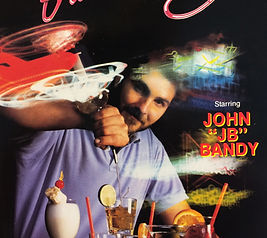
TGI Friday's produces a bartender training video featuring John “JB” Bandy, John Mescall, and “Magic” Mike Werner, then holds its first flair bartending competition, the Bar Olympics. Bandy wins.
Bartenders weren't just pouring bottles anymore.
They were throwing them.
Check my Flair Bartending page.
1987 — the Cosmopolitan travels from San Francisco to New York City
Patrick "Patty" Mitten says he first learned of the Cosmopolitan from his manager at the Patio Cafe in San Francisco.
In 1987, he moved to NYC and took a bartending job at the Life Cafe. There he shared the Cosmo with
co-workers, Melissa Huffsmith and Peter Pavia. Read the story on my Cosmopolitan Cocktail History page.
1988 — ABSOLUT CITRON
Absolut Citron, a lemon-flavored vodka that would become Absolut's best-selling flavored vodka and play an important role in one of the most famous cocktails of the next decade: the Cosmopolitan.
The Cosmopolitan already had several evolutionary ancestors and competing origin stories, but Citron became an important part of
the drink's modern history. Around this same period, versions of the Cosmo appeared using the new citrus vodka, cranberry, lime,
and orange liqueur.
By the 1990s, the combination of Absolut Citron and the Cosmopolitan helped propel both flavored vodka and the pink cocktail into mainstream bar culture.
Absolut gave vodka a lemon. Bartenders gave the world a pink Martini glass.
1988 — COCKTAIL
Tom Cruise stars in Cocktail, with John JB Bandy serving as his flair instructor. The movie helps ignite flair bartending around the world.
For the next several years, bartenders everywhere discovered that management gets nervous when you throw their liquor inventory in the air. So while bartenders were tossing bottles in the air and Tom Cruise was making bartending look like an aerobics class with liquor, the country was fundamentally changing its relationship with alcohol, driving, and sex.
1988 — SOMETHING ELSE IS HAPPENING
While flashy cocktails dominate popular culture, bartender Dale "King Cocktail" DeGroff begins taking a more culinary,
fresh-ingredient approach at New York's Rainbow Room.
It didn't look revolutionary yet.
But a seed had been planted.
1989 — the Cosmopolitan travels from the Life Cafe to the Odeon in NYC and the Miami Beach Cosmopolitan is created
Melissa Huffsmith introduces the Cosmopolitan to her manager at The Odeon in New York City in the spring. In March, bartender Cheryl Cook creates her Cosmopolitan at The Strand in Miami Beach, Florida.
Read the story on my Cosmopolitan Cocktail History page.
The 1980s cocktail may have looked like a party in a glass, but there was a lot more
going on underneath the little paper umbrella.
1990s — THE COCKTAIL STARTS REMEMBERING ITS PAST
Cocktail history takes a quiet but important turn in the 1990s. While flavored Martinis and vodka drinks dominated mainstream bars, a small group of bartenders began rediscovering fresh citrus, classic recipes, forgotten spirits, proper technique, and quality ingredients.
Meanwhile, California's 1998 smoking ban had bar people convinced the business was doomed, and by decade's end everyone behind the bar was bracing for Y2K, wondering if the registers would even work at midnight.
The Second Golden Age was quietly warming up.
Early 1990s—Dale "King Cocktail" Degroff popularized his own version of the cosmopolitan
Dale DeGroff learned of the Cosmopolitan at San Francisco’s Fog City Diner and brought it to New York’s Rainbow Room. His recipe used two ounces of cranberry juice, producing a deeper-red cocktail. This deeper-red style of Cosmopolitan is the version later seen on the TV show, Sex and the City. In 1994, The Central New Jersey Home News published DeGroff's Cosmopolitan recipe , calling for two ounces of cranberry juice, making a distinctly red cocktail. In addition, Bob Sennett’s 1993 Complete World Bartender Guide mentions the Cosmopolitan, and its recipe produces a red cocktail.
Read the story on my Cosmopolitan Cocktail History page.
1991 — COCKTAILS MEET THE INTERNET
Chuck Rohm sold a flair-bartending VHS on bottlesup.com.
A cocktail website. Imagine that catching on.
1992–1995 — THE CRAFT SEEDS SPREAD
Bartenders and writers such as Paul Harrington, Dale DeGroff, Steve Olson, Gary Regan, Jared Brown and Anistatia Miller,
help revive interest in classic drinks and fresh ingredients. Cocktail websites also begin appearing on the young World Wide Web.
Check my First Bar & Cocktail Websites page.
The revolution wasn't happening everywhere yet.
But bartenders were beginning to ask dangerous questions like:
“What if we used fresh lemon juice?”
1996 — The movie Swingers prominently features classic cocktails and quality spirits, while bars such as Cleveland's Velvet Tango Room, founded by Paulius Nasvytis, embrace a more traditional cocktail approach.
1997–1998 — COCKTAIL MEDIA EXPLODES
Books, magazines, television, and the Internet increasingly focus on cocktails. Paul Harrington and Laura Moorhead publish the influential Cocktail: The Drinks Bible for the 21st Century, while fresh-classic bars emerge in Boston and Las Vegas.
And on a side note, California becomes the first state to ban smoking in bars—just in time for the fresh-cocktail movement. Because if you're going to grow mint on the windowsill, it's probably best not to smoke it before it reaches the Mojito.
And then television changes one particular cocktail forever.
1998 — SEX AND THE CITY MEETS THE COSMO
The Cosmopolitan appears on television and then lands in the hands of Carrie Bradshaw and friends on HBO's Sex and the City. By 1999, the Cosmo appears repeatedly on the show and becomes a worldwide sensation.
Four women walk into a bar...
…and suddenly every bartender on Earth needs cranberry juice.
Read the story on my Cosmopolitan Cocktail History page.
1999 — PARTY LIKE IT'S 1999 — MILK & HONEY
On New Year's Eve, Sasha Petraske opens Milk & Honey in New York City, an enormously influential moment in the emerging craft cocktail movement.
Meanwhile, the mainstream cocktail world is awash in Cosmopolitans, flavored Martinis, flavored vodkas, and Martini bars with menus containing hundreds of drinks.
Two cocktail worlds were now running simultaneously.
One was asking:
“What obscure pre-Prohibition bitters did Jerry Thomas use?”
The other was asking:
“Can you make my Martini taste like birthday cake?”
And somewhere between the two, the seeds of the Second Golden Age of Cocktails had officially taken root.
Next stop: the 2000s—when bartenders rediscover history, fresh ingredients return, speakeasies multiply, ice cubes become enormous, and suddenly everybody owns a bottle of bitters nobody had heard of ten years earlier.
2000–Present Craft, COVID & Cocktails in the Digital Age
Modern cocktail history really begins here. The new millennium opened with Appletinis, flavored vodkas, Mojitos, and bartenders dancing on bars—but underneath all that sweet-and-sour mix, something important was happening.
Bartenders began digging through old cocktail books, squeezing fresh citrus again, making their own syrups and bitters, obsessing over ice, rediscovering forgotten spirits, and treating bartending as a profession worth studying.
Read my Cocktail Renaissance Timeline 1980s-2010.
Between 2000 and 2010, America's modern craft-cocktail movement went from a handful of pioneering bars to an international movement. By the 2010s, a bar no longer needed suspenders, handlebar mustaches, Edison bulbs, and a secret entrance to make a great cocktail.
Thank God. We were running out of telephone booths to hide doors behind.
Vodka: straight‑up/stirred drinks like Martini, Vodka Martini, Dirty Martini, Wet Martini, Half & Half Martini, Chocolate Martini, Espresso Martini, Appletini, Lemon Drop Martini, Porn Star Martini, and Breakfast Martini; sours and shakes such as Cosmopolitan; highballs and long drinks including Screwdriver, Vodka Cranberry (Cape Codder with a lime garnish), Vodka Red Bull, Vodka Soda Spritz, Moscow Mule, and Bloody Mary (plus make‑your‑own Bloody Mary bars).
Gin: Negroni, White Negroni, and Kingston Negroni; sours and shakes including Gin Basil Smash and Amaretto Sour (plus Jeffrey Morgenthaler’s version); highballs and long drinks such as Gin‑Gin Mule, Aperol Spritz, and French 75; and modern signatures like Aviation, Last Word, Paper Plane, Naked and Famous, Final Ward, Division Bell, Remember the Alimony, French Pearl, Gin Blossom, and Chartreuse Swizzle.
Whiskey (Bourbon / Rye / Scotch / Irish): Old Fashioned, Brown Sugar Old Fashioned, Benton’s Old Fashioned, Oaxaca Old Fashioned, Manhattan, Black Manhattan, Revolver, and Boulevardier; sours and shakes including Whiskey Sour, New York Sour, Gold Rush, Amaretto Sour, Jeffrey Morgenthaler’s Amaretto Sour, and Trinidad Sour; highballs and long drinks such as Highballs (generic), Irish Coffee, Frozen Irish Coffee, and Kentucky Mule; and modern signatures like Penicillin, Final Ward, Death Flip and Paper Plane.
Rum: Daiquiri, Strawberry Daiquiri, and Bay Leaf Daiquiri; highballs and long drinks such as Dark ’n’ Stormy; tropical/frozen classics including Mojito, Mai Tai, Zombie, Piña Colada, Hurricane, and Painkiller.
Tiki / Tropical (1900s Classics That Remained or Became Popular Again in 2000–2026): Mai Tai (1930s–1940s), Jungle Bird (1970s), Three Dots and a Dash (1940s), Navy Grog (1930s–1940s), Saturn (1960s), Jet Pilot, Test Pilot, and Fog Cutter (1940s–1950s).
Tiki / Tropical (2000–2026 Creations Only): Artichoke Hold, Absinthe Colada, Brancolada, Fay Wray, Wormhole, Slice of Paradise, Fortress of Solid Dudes, and Dive Simulation. Bars such as False Idol, push the ube style with ingredients like taro, pandan, mango sticky rice, cultured nut butters, and other contemporary techniques.
Tequila / Mezcal: Margarita, Tommy’s Margarita, Mezcal Margarita, Spicy Margarita, Creamsicle Margarita, Ranch Water, Paloma, and Siesta; highballs and long drinks such as Tequila Sunrise, Paloma, and M&M (Mezcal & Amaro); and modern signatures including Oaxaca Old Fashioned, Division Bell, Naked and Famous, Siesta, Rosita, Piña Verde, and Death Flip.
Other (Brandy, Cognac, Chartreuse, Multi‑spirit, etc.): Brandy Alexander; sours and shakes such as Pisco Sour and a generic “Sours with or without fresh egg white” entry; and modern signatures like Corpse Reviver No. 2, Old Cuban, Gold Rush, Jungle Bird, Remember the Alimony, French Pearl, Gin Blossom, Piña Verde, and Death Flip.
Zero‑proof: Non‑alcoholic versions of stirred drinks, sours, highballs, spritzes, mules, tropical/frozen drinks, and modern signature zero‑proof cocktails.
In addition: Barrel‑aged cocktails, clarified cocktails, cocktails made with Super Juice, kegged or tap‑served cocktails, fat‑washed cocktails, smoked cocktails (using tableside smoke, smoked ice, or smoked syrups), frozen and blended cocktails with slushie or granita textures, nut‑syrup‑forward drinks built around orgeat and similar syrups, sherry‑ and fortified‑wine‑forward cocktails, and bitter‑forward, amaro‑heavy cocktails.
This Monster List makes an important point: everything survived. The Manhattan didn't disappear when the Cosmopolitan arrived. The Cosmopolitan didn't disappear when the Paper Plane flew in. The Old Fashioned, Martini, Daiquiri, Negroni, Margarita, and dozens of other cocktails simply kept making room for the newcomers. Some drinks disappeared for a while and came back. Others were reinvented, rediscovered, or given a modern twist. And entirely new cocktails earned places beside drinks more than a century old. Instead of replacing its past, cocktail culture just kept adding to it.
That's what I love about following cocktail history through a timeline. One drink leads to another, one bartender inspires another, old ideas become new again, and eventually you can see how all the dots connect. Today, we have more than two centuries of cocktails standing side by side on the same bar—and somehow, there's still room for whatever flies in next. ✈️🍸
Milk & Honey, Pegu Club, Flatiron Lounge, Smuggler’s Cove, Latitude 29, Happy Accidents, Jewel of the South, The Pour House, Death & Company, On the Rocks, Hop Sing Laundromat, Double Chicken Please, The Brotherhood of Thieves, PDT (Please Don’t Tell), The Dead Rabbit, Attaboy, Katana Kitten, Sip & Guzzle, Anvil Bar & Refuge, Best Intentions, Bar Tonique, Gold Clover Bar, Trick Dog, Herbs and Rye, Dante, Employees Only, Artesian, Drink, The Connaught Bar, Vessel, The Varnish, The Office, Downtown Bar & Grill, The Dugout, The Locker Room, The Billy Goat, The Thirsty Monk, The Apothecary Bar, Remedy Room, Mai-Kai, Three Dots and a Dash, UnderTow, False Idol, The Edison, The NoMad Bar, The Franklin Mortgage & Investment Co., The Laundry Room, Midnight Cowboy, Williams & Graham, Bourbon & Branch, and Needle & Thread.
Crunk, turnt, lit, gone, twisted, buzzed, tipsy, feeling it, wasted, hammered, plastered, smashed, tanked, trashed, blitzed, bombed, fried, juiced, toasted, canned, loaded, sloshed, liquored up, and pissed.
So far, the century has brought brands including: Cîroc vodka, Many Absolut vodka flavors, Many Stoli vodka flavors, Many Smirnoff vodka flavors, Many Grey Goose vodka flavors, Many Bacardi rum flavors, Many Baileys Irish Cream flavors, Tanqueray No. Ten, Don Julio 1942, Fireball Cinnamon Whisky, Red Stag black cherry Bourbon, Maker's Mark 46, Elijah Craig Barrel Proof, WhistlePig Rye, Angels Envy, High West whiskey, and my personal favorite, Masterson’s 10 Year Rye.
Rothman & Winter: Crème de Violette, St. Elizabeth Allspice Dram, Velvet Falernum, Batavia Arrack van Oosten & more,
St-Germain Elderflower Liqueur, Domaine de Canton Ginger Liqueur, Hendrick’s gin original: Hendrick's Orbium, Hendrick's Kanaracuni, Hendrick's Neptunia, and Hendrick's Grand Cabaret, Cocchi Americano: Cocchi Vermouth di Torino 'Storico', Cocchi Rosa, & Cocchi Dopo Teatro, Hayman's Old Tom gin, Ransom Old Tom gin, Tanqueray Old Tom, Citadelle No Mistake Old Tom, Bols Genever, Mr. Black coffee liqueur, Cynar, Reyka vodka, The 86 Co: Fords Gin, Aylesbury Duck, Cana Brava, and Tequila Cabeza
Tempus Fugit brand liqueurs: Crème de Banane, Crème de Noyaux, & more, Plantation/Planteray Rums: Plantation Pineapple Stiggins' Fancy, Cut & Dry Coconut, & more, White Claw hard seltzer, Truly hard seltzer, Pierre Ferrand Dry Curaçao, Hamilton Rums: Hamilton Demerara 86 Proof, Hamilton Jamaican Pot Still Black, & more, Hochstadter's Slow & Low Rock & Rye, Ancho Reyes Chili liqueur,
Chareau aloe liqueur, Absinthe: Lucid Supérieure, Kübler, Pernod, & more, Several Amaros, Sipsmith Gin & Sipsmith Sloe Gin (first zero-proof 2013), Zero-Proof: Ritual, De Soi, Everleaf, & more.
Buffalo Trace Antique Collection: Eagle Rare 18yr, Sazerac 17yr, William Larue Weller 19yr, George T. Stagg, & Thomas H. Handy Sazerac Rye & Sazerac 18-Year-Old Rye, Wild Turkey Master's Keep & Wild Turkey Master's Keep Bottled-in-Bond, Bulleit Bourbon, Bulleit Rye, & Bulleit 20-Year-Old Rye, Russell's Reserve 13 Year, Jack Daniel's 10 Year Old, Old Forester Parson's First Whiskey, Hudson Baby Bourbon, Garrison Brothers bourbon, Jameson Irish whisky additions: Jameson Black Barrel, Jameson Stout Caskmates, Jameson Orange, & more,
Rumchata, Jefferson’s Bourbon: Jefferson's Ocean Aged at Sea (first Bourbon to be aged on ships traversing the seas), Jefferson's Presidential Select, & more, and Celebrity brands: Casamigos Tequila - George Clooney, Sauza 901 Tequila - Justin Timberlake, Thunderstruck Tequila - AC/DC band, Crystal Head Vodka - Dan Aykroyd, Teremana Tequila – "The Rock" Johnson, Old Whiskey River Bourbon - Willie Nelson, Aviation American Gin - Ryan Reynolds.
2000 — COYOTE UGLY
The film Coyote Ugly hits theaters, showing scantily clad bartenders dancing on the bar, slinging drinks, breathing fire, and generally doing everything except ringing in drink orders correctly.
Suddenly, bartending looked like a combination of nightclub, rodeo, and gymnastics.
2002 — THE MOJITO EXPLODES
James Bond strikes again. In Die Another Day, Pierce Brosnan hands Halle Berry a Mojito in Cuba, helping revive the classic worldwide.
Almost overnight, bartenders everywhere began hearing:
“Can I get a Mojito?”
Unfortunately, bartenders everywhere responded:
“Does anyone know where we keep the mint?” Probably 10 bars in America had fresh mint.
That same year, Dale DeGroff publishes The Craft of the Cocktail, and Tales of the Cocktail launches in New Orleans—two major milestones in America's cocktail renaissance.
2003–2006 — CRAFT COCKTAILS SPREAD
Influential craft bars open around the country, including Flatiron Lounge, Pegu Club, Little Branch, and Vessel. Cocktail books, magazines, classes, festivals, and online education spread knowledge faster than ever before.
Bartenders begin talking about fresh juice, homemade syrups, obscure bitters, proper dilution, forgotten classics, and perfectly clear ice.
Customers begin wondering why their drink is taking twelve minutes.
2007 — ABSINTHE RETURNS
After being unavailable in the United States for nearly a century, absinthe legally returns to American shelves.
The television series Mad Men also debuts, helping renew popular interest in classic cocktails, while influential bars such as PDT push cocktail creativity forward.
The Old-Fashioned suddenly becomes cool again.
Don Draper accomplished what 100 years of bartender manuals couldn't.
2008–2009 — THE CRAFT MOVEMENT GROWS UP
The Sazerac becomes the official cocktail of New Orleans, Clover Club opens in Brooklyn, Cocktail Kingdom begins selling high-quality professional bar tools, and Los Angeles gets influential craft bar The Varnish.
Cocktail bars are no longer a quirky little movement. Something bigger is happening.
2010s — THE SECOND GOLDEN AGE HITS ITS STRIDE
By 2010, cocktail history was entering its Second Golden Age in earnest. Bartenders experimented with barrel-aged cocktails, molecular techniques, mezcal, house-made bitters, shrubs, premium vermouth, tiki, and elaborate ice.
In other words, bartenders had discovered about 47,000 ways to make drinking more complicated.
2011 — THE OLD-FASHIONED IS COOL AGAIN
Ryan Gosling makes an Old-Fashioned in Crazy, Stupid, Love, further boosting the drink's revival.
The all-female cocktail competition Speed Rack also launches.
Angel's Envy Bourbon launches.
2013 — 2014 — COCKTAILS BECOME SERIOUS BUSINESS
Bottled craft cocktails appear, cocktail books become major publishing successes, celebrities enter the spirits business, and bars increasingly borrow techniques from professional kitchens.
Bartenders aren't just squeezing lemons anymore.
They're infusing, dehydrating, clarifying, smoking, fat-washing, barrel-aging, centrifuging, and occasionally making you wonder whether you accidentally walked into a laboratory.
2015–2016 — CRAFT BECOMES MAINSTREAM
The craft cocktail movement spreads beyond a small group of elite bars. Over 1,000 bars in America have gone fresh. Better cocktails begin appearing in neighborhood restaurants, hotel bars, casual establishments, and cities far beyond New York, San Francisco, London, and New Orleans.
Major books document the movement, including Robert Simonson's A Proper Drink, while books from influential bars and bartenders preserve modern cocktail techniques for another generation.
The original goal of the craft pioneers was finally happening:
A good cocktail didn't have to be a “craft cocktail.” It could just be a cocktail made correctly.
2017–2019 — STRAWS, INSTAGRAM & THE EXPERIENCE ERA
Cocktail history meets social media in this stretch. Instagram helps turn elaborate garnishes, dramatic glassware, smoke, flames, flowers, and photogenic presentations into powerful marketing tools.
Customers don't just drink the cocktail anymore.
The cocktail gets a photo shoot first.
At the same time, sustainability becomes a much larger industry conversation. Bars experiment with reducing waste, eliminating single-use plastic straws, composting ingredients, reusing citrus and kitchen scraps, and creating lower-waste cocktail programs.
Bartenders also increasingly discuss issues beyond recipes—mental health, substance abuse, workplace culture, diversity, inclusion, harassment, career longevity, and whether working yourself into the ground really makes you a better bartender.
The profession is growing up.
2020 — COVID CHANGES EVERYTHING
One of the strangest chapters in recent cocktail history: in early 2020, COVID-19 shuts down bars and restaurants around the world.
For bartenders, owners, servers, cooks, distributors, liquor brands, musicians, and countless hospitality workers, it is devastating.
But the industry does what hospitality people have always done:
It improvises.
Bars begin selling cocktails to-go, bottled cocktails, cocktail kits, family meals, virtual tastings, online cocktail classes, and anything else that might keep the doors from closing permanently.
Industry education moves online. For the first time in its 18-year history, Tales of the Cocktail becomes completely digital, with seminars, panels, mentorship, education, and events available online to a worldwide audience.
A bartender could suddenly attend a cocktail seminar in New Orleans while sitting on the sofa in pajamas. The commute was excellent.
THE QR CODE TAKES OVER
The humble QR code, invented decades earlier, suddenly becomes one of hospitality's favorite pieces of technology. Instead of touching a printed menu, guests scan a little black-and-white square with their phones and pull up the cocktail menu digitally.
Bars love that they can change prices and drinks without reprinting hundreds of menus.
Customers discover a new pre-dinner ritual:
“Honey, can you get this thing to scan?”
QR menus survive the pandemic and become commonplace in many establishments.
THE COCKTAIL TO-GO
One of COVID's biggest effects on American cocktail culture is the rapid expansion of cocktails-to-go.
Emergency rules in many states allow restaurants and bars to sell cocktails for takeout, giving struggling businesses another source of revenue.
What began as a temporary survival measure became popular enough that numerous jurisdictions later extended or permanently adopted some form of alcohol-to-go.
For the first time, your bartender could essentially say:
“Would you like a Margarita for the road?”
Legally.
2021 — THE INDUSTRY STARTS COMING BACK
Cocktail history's recovery era begins unevenly. Bars reopen as restrictions change from city to city.
And hospitality encounters another problem:
Where did everybody go?
Restaurants and bars struggle with staffing shortages as many experienced hospitality workers who left during the
shutdown simply don't return.
Tales of the Cocktail remains primarily digital in 2021, with limited in-person events. More than 6,700 attendees from
109 countries participate digitally.
The pandemic unexpectedly proves that cocktail education doesn't have to happen in the same room—or even the same country.
THE ESPRESSO MARTINI RETURNS
Another old drink comes roaring back: the Espresso Martini.
The cocktail becomes one of the defining drinks of the post-lockdown era.
Apparently, after surviving 2020, everyone decided they needed alcohol and caffeine simultaneously.
2022 — PEOPLE WANT TO GO OUT AGAIN
Cocktail history swings back toward experience in 2022. Cocktail bars rebound as customers return looking for something they couldn't reproduce at home: an experience.
Immersive bars, hidden rooms, theatrical presentations, elaborate glassware, tableside cocktails, rooftop bars, themed bars, and destination cocktail programs flourish.
At the same time, canned and bottled ready-to-drink cocktails (RTDs) continue expanding.
The line between bartender-made cocktail and packaged cocktail gets blurrier.
2022 — Harry Yee Dies at 104
Legendary Hawaiian bartender Harry Yee, creator of the Blue Hawaii, died on December 7, 2022, at the remarkable age of 104.
While bartending at the Hawaiian Village Hotel in Waikiki, Yee created at least 15 tropical cocktails, including the Blue Hawaii, Tropical Itch,
Hawaiian Eye, Guava Lada, Hot Buttered Okolehao, Scratch Me Lani, Catamaran, Naughty Hula, Hukilau, Diamond Head, Village Sunset,
and Wahine's Delight. He became known for imaginative garnishes that helped define the look of tropical drinks. His Tropical Itch even came with a bamboo back scratcher.
Yee originally garnished his Blue Hawaii with sugarcane, but guests chewed it and tossed the sticky remains into their ashtrays.
When I spoke with Harry in 2018, at age 99, he remembered the mess the cocktail servers had to clean up. So he replaced the
sugarcane with a Vanda orchid.
One of cocktail history's prettiest garnishes was apparently born because Harry Yee felt sorry for the cocktail servers.
PERSONAL NOTE: I'm especially grateful I found Harry when I did. What began as my search for an almost-forgotten bartender turned into years of conversations and birthday phone calls with a living piece of cocktail history. Not many people get to call the inventor of a famous cocktail and say, “Happy Birthday.” I got to do it more than once.
2023 — THE MOCKTAIL GROWS UP
A quieter but significant shift in cocktail history: non-alcoholic cocktails stop being an afterthought.
Instead of offering soda water with lime or a glass of cranberry juice, serious bars begin creating dedicated zero-proof cocktail menus using non-alcoholic spirits, bitters, teas, shrubs, botanicals, fermented ingredients, and sophisticated syrups.
The term “sober curious” becomes part of drinking culture, and Dry January continues gaining attention.
The change isn't simply abstinence. Many customers alternate between alcoholic and non-alcoholic drinks during the same evening.
Bartenders have found they can charge more than $3 for something without vodka.
2024 — DRINKING LESS BECOMES MAINSTREAM
Cocktail history takes an unexpected turn toward moderation. No- and low-alcohol drinking becomes one of the most important changes in modern beverage culture.
In the United States, no-alcohol volume had risen 29% in 2023 versus 2022, including growth in alcohol-free beer, wine, spirits, and RTDs.
Bars increasingly add sophisticated non-alcoholic sections to their menus.
Importantly, this doesn't necessarily mean everyone stopped drinking.
Consumers increasingly practice moderation—drinking fewer drinks, taking periodic breaks from alcohol, or alternating traditional cocktails with zero-proof ones.
The bartender's new question becomes:
“Would you like that with alcohol?”
Nobody in 1985 saw that coming.
2025 — ZERO-PROOF ISN'T A FAD
By 2025, this new chapter of cocktail history looks permanent. The no/low category is clearly becoming a lasting part of bar culture, with volume growing another 13% during 2024.
In the United States, no-alcohol spirits had achieved a five-year compound annual growth rate exceeding 60% through 2024.
Consumers also become more selective about when and how much they drink. Quality increasingly matters because for some guests, that cocktail may be the only alcoholic drink of the evening.
Which brings cocktail history around in a beautiful circle:
If you're only having one, make it a good one.
2026 — WHERE WE ARE NOW
Cocktail history today would look both familiar and completely bizarre to Jerry Thomas.
We still make Old-Fashioneds, Manhattans, Martinis, Sours, Juleps, Punches, Highballs, and Fizzes based on formulas bartenders have used for generations.
But today's bartender may also use QR menus, social media, online training, clarified juices, giant clear ice, house fermentation, draft cocktails, bottled cocktails, canned cocktails, non-alcoholic spirits, sustainable ingredients, reservation apps, and technology that didn't exist a generation ago.
No-alcohol drinks and newer “alcohol-adjacent” beverages continue expanding; industry research in 2026 projects continued global growth for both categories.
And yet after 10,000 years of humans fermenting things, hundreds of years of punch bowls, two Golden Ages, Prohibition, disco, flavored Martinis, a pandemic, and approximately seventeen million pictures of cocktails posted online, the most important part hasn't changed:
People don't really go to bars just to drink.
They go to celebrate, flirt, laugh, complain, meet people, hear stories, tell stories, escape, connect, and feel like they belong somewhere for a little while.
The tools change.
The drinks change.
Hospitality doesn't.
And somewhere right now, a bartender is making a drink that will probably end up in the 2100 Cocktail Timeline.
I won't be around to add it.
By 2060, I'll be gone, but hopefully this page won't be.
My hope is that someone in my family will pick up where I left off—adding the
new drinks, bartenders, bars, discoveries, inventions, and stories that haven't happened yet.
And when their time comes, maybe they'll pass it along to the next person.
I've tried to leave a little something behind for them, too.
I donated my collection of autographed cocktail books, along with a
10-year bar log documenting life behind a New Orleans French Quarter bar,
to the Museum of the American Cocktail collection in New Orleans (MOTAC),
so future bartenders and cocktail historians will have somewhere to
look back at a small piece of the history that came before them.
Because cocktail history doesn't end. We just take turns telling it.
Good to know: In 2026, the Southern Food & Beverage (SoFAB) Research
Center (includes MOTAC) relocated to the second floor of the Nunez Library on
Nunez Community College’s Chalmette campus in the Arts, Sciences and
Technology building.
Location: 3710 Paris Road, Chalmette, LA 70043.
Phone: (504) 278-6231 or (504) 278-6232.
Email: library@nunez.edu
Hours: Call or email for current hours.
WHAT are we DRINKING so far?
WHAT are THE BARS called so far?
HOW Do we SAY “DRUNK” so far?
WHAT is APPEARING ON THE BACKBAR so far?