Best viewed on a desktop, laptop, or tablet.
没有人知道鸡尾酒开始的确切日期,但通过考古发现,假设人类将各种成分混合在一起为自己创造美味的饮料已有 10,000 年的历史,因为那是国内农业开始的时候——如果你相信失落的大陆然后它可以追溯到更远。蜂蜜酒(蜂蜜制成)、麦酒(啤酒)和葡萄酒(水果制成)是古代文明中最常见的酒精饮料,因此还假设这些成分混合在一起制成蜂蜜味饮料。此外,可以想象加入香草和香料以增加风味,有时可能会使用浸泡过的药草。
社交饮酒已经以某种形式成为每种文化的一部分,随着时间的推移,人们开始旅行(出于各种原因)并需要住所,因此沿途简陋的旅馆提供临时住所、食物和饮料——现代酒店提供的基本设施相同今天。公共房屋(酒吧)建在城镇中,充当“信息中心”,您可以在这里了解时事、八卦、抱怨天气、调情、讲故事,当然还有喝酒。数百年来,情况几乎保持不变。
关于“鸡尾酒”这个词的来源,有很多理论。其中包括一位阿兹特克公主,一位称最喜欢的饮料为 cockwine的古罗马医生,一个新奥尔良法国鸡蛋杯,实际上是用一整只公鸡和麦酒制成的 Cock Ale Punch (ick!),一种用于没有精神的人的姜根栓剂马,还有一个酒馆老板,他把公鸡尾毛放在士兵的饮料里(鸡尾)。
已知第一个提到亚洲精神“arrack”的是1200年代的旅行商人。在 1300 年代,创造了“aqua vitae”(“生命之水”)这个词,并且在 1400 年代生产了雅文邑和苏格兰威士忌。但是,在 1500 年代,第一次记录将烈酒(早期的朗姆酒)与其他三种成分混合在一起,是为生病的水手准备的。在 1600 年代和 1800 年代之间,公共饮料是装在大碗里的——所有人都用杯子。这些杯子和碗产生了我们今天所知道的个人大小的鸡尾酒。
没有人知道是谁发明了这种鸡尾酒,但人们一致认为,在 1600 年代,公共批次装在潘趣酒碗中,然后用杯子喝掉,这催生了我们今天所知道的个人鸡尾酒。关于“鸡尾酒”这个词的起源有很多理论。到今天为止,它已缩小到两个。一个来自 1700 年代的马贸易行业,另一个来自基于真人的虚构角色,但都没有得到证实。
迄今为止,“鸡尾酒”一词的第一个印刷形式出现在 1798 年。与饮料有关的单词于 1803 年首次印刷,第一个印刷定义是在 1806 年。
第一本已知的英国饮料收据(食谱)书于 1827 年出版。第一本已知的美国鸡尾酒配方书于 1862 年出版。
据我们所知,薄荷朱利酒是美国的第一款鸡尾酒。
在 1920 年代之前,在美国,高档的白人男性在高档轿车和酒吧里喝高档鸡尾酒,他们通常 有一个名为“女士酒吧”的侧厅供着名女性使用。 唯一允许进入主酒吧的女性是女士和妓女。 普通乔在酒吧或家里喝啤酒、葡萄酒、威士忌和苹果酒。
鸡尾酒的第一个黄金时代是在 1860 年到 1919 年之间,而鸡尾酒的第二个黄金时代的种子是在千年左右播下的。
马提尼是最具标志性的鸡尾酒,也是鸡尾酒文化的象征。
美国禁酒令的废除、女性在大多数酒吧的社交自由以及好莱坞技术(有声电影)为 1930 年代和 1960 年代之间的鸡尾酒带来了魅力。
自 2002 年以来,每年 7 月都会在新奥尔良举办世界上最大的鸡尾酒节,鸡尾酒的故事。
1500s
如果您拥有一家酒吧、啤酒屋、小酒馆或旅馆,那么您可能正在种植自己的食物和饮料来服务客人。除了有土地用于花园之外,您还需要照料动物,为旅行者提供马厩(我们今天称它们为停车场),有一个生产酒精饮料的区域,并且有足够的文化来存放书籍、支付账单、管理帮助,并收取款项。酒馆地板通常由沙子制成,在酒吧区周围通常有一个闸门(金属垂直关闭门)。多任务晚餐时,厨房里的狗经常被放在一个转盘里——狗会在转盘里走,慢慢地把烤肉放在火上。
啤酒屋、酒馆、小酒馆和旅馆的名称包括 Beverley Arms、Black Lion、Boar's Head、Bull Long Medford、Crown Sarre、King's Head、Crane Inn、Devil's Tavern、George、The Lion、The Prospect of Whitby、the白马和叶奥尔德米特。
听到的饮酒词有“aled up”、“befuddled”、“bizzled”、 “drinking deep”、“戴上大麦帽”、“有不止一个可以容纳”、“狮子醉了”、“麦芽在饭菜上”, ” “吵闹”,“吞下了酒馆令牌”,“打碎了”,“剃光了”, “喝了起来”,“被洗了”和“被削了”。
1500 年代创建的新品牌和烈酒包括 aguardiente de caña(朗姆酒)、Bénédictine、白兰地、cachaça、Disarrono、jenever、kummel、mezcal、pisco 和苏格兰威士忌。
1500
甘蔗在伊斯帕尼奥拉收获,用于制作朗姆酒。
苏格兰国王詹姆士四世授予生产生命之水。
1510
一位本笃会修士创造了本笃会。需要它的现代流行鸡尾酒包括新加坡司令鸡尾酒、Vieux Carré 和 Bobby Burns。
1514
法国国王路易十二授权醋生产商蒸馏生命之水。
1518
西班牙统治者查理五世向伊斯帕尼奥拉进口了 2,000 名奴隶,在甘蔗地里耕作。
1525
Amaretto Disaronno 在意大利生产。
一本开创性的蒸馏书出版并激发了荷兰生产brandewijn(烧酒)。
1531
西班牙定居者在墨西哥蒸馏当地的发酵饮料来制作麦斯卡利(mezcal)。
1533
甘蔗 eau-de-vie 诞生了(后来被称为 cachaça)。
意大利山区的僧侣制作利口酒。
1534
出版了一本包含 70 多种以伏特加为基础的药物的书。这是第一次记录“伏特加”这个词。
1537
法国国王弗朗西斯一世授予生产生命之水。
1538
秘鲁农民生产我们今天所知的皮斯科。
1552
在 Constelijck Distiller Boek 一书中,Philippus Hermanni 在他的 1568 年提到了一种注入杜松的生命之水。
1575
Lucas Bols 在阿姆斯特丹建立了一家酿酒厂并开始制作 jenever。
1586
Aguardiente de caña(基本上是朗姆酒)、hierba buena(属于薄荷科的古巴草本植物)、酸橙和糖分批供应给一艘生病的水手及其英国船长弗朗西斯·德雷克爵士(绰号 El Draque,西班牙语为“龙”)。所需要的只是添加汽水,他们自己就有了一桶莫吉托。
1600年代
我们很清楚小酒馆和酒吧的样子,因为荷兰画家扬·斯蒂恩(Jan Steen)绘制了详细的日常生活画作。他与饮酒有关的画作包括酒馆里的王子节(1660 年;他在画中画了自己)、酒馆花园(1660 年)、酒馆里(1660 年)、饮酒者(1660 年)、欢乐派对(1660 年)、农民之前旅馆(1653),离开酒馆(日期未知),露台上的快乐公司(1670)和酒馆场景(1670)。在 Steen 的画作中看到的东西是水罐、瓶子、容器(有些是玻璃制成的)、乐谱、乐器、调情、火、食物、笑声、游戏、赌博、动物、儿童、玩具、混乱、男人抓女人、吸烟、头骨、桶和笼子里的鸟。减去孩子和动物,这几乎是现代酒吧中所见的。我个人最喜欢的画作是《老歌如歌,少年如歌》 。
在 1600 年代初期,punch(paunch,一个印度语单词,意思是“五”)在往返印度的英国水手和香料商人中流行起来。在回家的途中,他们会用五种成分制作大碗潘趣酒,包括烈酒、柠檬、糖、水和香料。拳拳传播到英国的上层阶级,很快就被带到了新世界(美国)。上流社会拥有银制的碗、杯子和长柄勺,伦敦中央刑事法院的记录记录了这些物品被盗的许多事件——大多数时候,拳头还在碗里!
对于在新世界寻求新生活的朝圣者来说,生活是艰难地开拓一片未知的土地,同时依靠英国船只提供物资。在大多数情况下,定居者处于生存模式,但不知何故,他们找到了时间和资源来开设不是一家而是两家朗姆酒酿酒厂。朗姆酒是早期美国的资金来源。
一些啤酒屋、酒馆、小酒馆和旅馆的名称包括:Bear at Bridge-foot、Bull and Bush、Bull and Gate、 Grapes、Green Dragon Tavern、Hatchet Inn、the Anchor、the Plough、the Red Lion、the Seven Stars、Three修女和特拉法加酒馆。
在 1600 年代听到的饮酒词包括“狭海上将”、“醉醺醺的”、“豪饮”、 “冒泡的帽子病”、“抓到一只狐狸”、“D and D”(醉酒和无序)、“沉闷”在眼睛里”、“高高在上”、“咯咯地笑”、“脑袋里有面包和奶酪”、“糊里糊涂”、 “在不断地喝着旋转木马”、“在狂暴中”和“看到双倍的。”
1600 年代的新品牌和烈酒包括 Bushmills 爱尔兰威士忌、Chartreuse 和黑格苏格兰威士忌。
1608
老布什米尔斯酿酒厂在爱尔兰成立。今天,它拥有世界上第一家获得许可的威士忌酒厂的称号。
1620
11 月 9 日,朝圣者在五月花号上将白兰地和杜松子酒带到了新世界。101 名勇敢的殖民者在冬天住在船上,补给很快就用完了。
1623
Jenever在英国戏剧《米兰公爵》中被提及。
1625
黑格成为第一款公认的苏格兰威士忌。
1635
葡萄牙政府禁止销售cachaça。禁令于 1695 年解除。
1637
酿酒设备被带到巴巴多斯岛。
1644
酿酒设备被带到马提尼克岛。
1657
一家朗姆酒酿酒厂建在波士顿。
1664
朗姆酒酿酒厂建在纽约史泰登岛。
1650
为了节省空间,罗伯特·布莱克上将将啤酒配给换成了白兰地。
1655
威廉·佩恩中将命令朗姆酒包含在每日口粮中。
1668
在伦敦的刑事法庭,托马斯凯里被判犯有盗窃拳头和碗的罪名。
1674
哈佛大学建立了自己的啤酒厂。
1676
在访问印度时,医生约翰弗莱尔提到了英国人用酒制作的潘趣酒。
1688
William of Orange 从荷兰进口 jenever 并开始生产英国杜松子酒。
1691
Nolet 开始在荷兰蒸馏(他们后来生产 Ketel One 伏特加)。
1694
圣诞节那天,英国海军司令爱德华·拉塞尔海军上将在西班牙加的斯港为 6000 人举办了一场盛大的派对。他雇佣了 800 名员工和 1 名男孩,乘船漂浮在冲床上,为客人提供服务。
1695
DeKuyker 在荷兰开设了一家酿酒厂。
1697
创造了一个精美的英式潘趣酒碗。他们称之为蒙特斯。
1698
在新泽西,威廉莱尔德开始生产莱尔德的苹果杰克供个人使用。
1699
Kenelm Digby 发表了 Kenelm Digby Knight 爵士的衣柜打开了,其中提供了许多葡萄酒和啤酒的食谱。特别是一种配方,叫做 Cock-Ale。 Digby 说:“这些日子我们已经忘记了如何制作 Cock-Ale。”这种啤酒需要一个月的时间来制作,并且需要煮一只公鸡。这是已知的第一个关于 Cock Ale 的参考文献。后来出现在几本 1700 年代的烹饪书籍中。
1700年代
殖民时期的美国正在安家落户。到 1700 年,人口达到 275,000 人(波士顿和纽约市的人口最多)。 1700 年,殖民地还有 140 多家朗姆酒厂。到本世纪末,人口达到530万,其中100万为非洲裔。
在本世纪,殖民者努力摆脱英国。旧国家不想放松的例子包括糖蜜法(对朗姆酒征税)、羊毛法、铁法、货币法、糖法(对朗姆酒征税)、印花税法、波士顿大屠杀和波士顿倾茶事件。这一切都导致了美国革命(1775-1783)。脱离英国后,一种名为 Sling 的饮品开始流行起来。它只是用您选择的烈酒、糖和水制成的。后来,加入一两滴苦味,制成苦味吊索,被认为是早上的好饮料。这些是老式的确切成分。
1776 年美国独立宣言的签署与马德拉岛共同庆祝。本杰明富兰克林写了一本饮酒字典,发明了双光眼镜,并发现了电。詹姆斯·哈格里夫斯发明了纺车,美国威士忌酒厂开始兴起,发明了三明治,为了好玩,热气球于 1782 年首次飞行。在池塘的另一边,工业革命正在引领比赛在纺织生产、蒸汽动力和炼铁领域,但在杜松子酒成瘾的斗争中输了。这也是苦艾酒被发现的世纪。
从 1700 年代中期开始,通常在小酒馆中设立邮政服务部门。啤酒屋、酒馆、小酒馆和旅馆的一些名称包括甲壳虫和楔子、手铃小酒馆、城市小酒馆、弗朗西斯小酒馆、让·拉菲特的铁匠铺、杰索普的小酒馆、雄鹿和猎犬、鹰、羔羊、脏鸭、绿人、王冠、旧船、Publik House、Prospect of Whitby、Wiggin's Tavern、Blue Bell Inn 和 O'Malley's Pub。
在 1700 年代听到的饮酒词太多了,因为本杰明·富兰克林在 1737 年写了一本烛光书,题为《饮酒者词典》,其中列出了 200 多个饮酒词。其中一些和其他包括“沉迷”、“去过巴巴多斯”、“cockadoodled”、“cherry merry”、“cracked”、“cranked”、“剪辑国王的英语”、“头晕目眩”、“喝得像一条鱼”、“醉得像独轮车”、 “不怕人”、“糊涂”、“像山羊一样饱”、“有鼻涕”、“昏昏沉沉”、“喝得开心”、“满头蜜蜂” 、”“在高处”、“顶起”、“快活”、“喝得酩酊大醉”、“把它舔起来”、“失去了方向舵”、“烂醉如泥”、“被拧死了”、“醉醺醺的”、“醉醺醺的” ”和“炖”。
世界上的新品牌和烈酒包括苦艾酒、纳尔逊海军上将朗姆酒、阿普尔顿朗姆酒、克鲁赞朗姆酒、Drambuie、埃文威廉威士忌、戈登杜松子酒、哈维布里斯托尔奶油雪利酒、何塞库尔沃、莱尔德苹果杰克和马德拉酒。
1708
《科尔老国王》这首诗描述了国王要他的烟斗、碗(潘趣碗)和音乐家:“科尔老国王是一个快乐的老灵魂,他是一个快乐的老灵魂;他要他的烟斗,他要他的碗,他要他的提琴手三个。”
1712
Magnum Elixir Stomachicum 是第一个已知的苦味剂,由Richard Stoughton 创造并获得专利。
1717
新泽西州的 Colt Neck Inn 由 William Laird 的后裔开设,首次出售苹果杰克。
1718
法国人建立了新奥尔良。一百年内,受法国影响的鸡尾酒将被创造出来。
1721
伦敦市的四分之一用于生产杜松子酒。
1726
伦敦有 6,000 多个地方可以购买杜松子酒。
1727
伊丽莎·史密斯 (Eliza Smith ) 在伦敦出版了《完美的家庭主妇:或者,成功的绅士伴侣》 。五十年出版了十八个版本。这本书包含数百张家庭收据(食谱),包括许多葡萄酒、甜酒和牛奶潘趣酒食谱:“制作精美的牛奶潘趣酒。取两夸脱水、一夸脱牛奶、半品脱柠檬汁和一夸脱白兰地,加糖适量;将牛奶和水放在一起稍微温热,然后是糖,然后是柠檬汁,搅拌均匀,然后是白兰地,再次搅拌并通过法兰绒袋,直到非常细,然后装瓶;它将保留两周或更长时间。”史密斯还用一只老公鸡提供了一份公鸡啤酒潘趣酒的配方。该配方甚至可能会搅动当今购买肉食的人的胃,因为他们习惯于将产品包裹在闪亮的塑料中,因此此处未对其进行描述,但如果需要,可以在谷歌上搜索。您可以在此处在 Google 图书上免费阅读。
1732
美国第一个钓鱼俱乐部——也是今天最古老的连续俱乐部——被称为“Schuylkill 的殖民地”(今天它被称为宾夕法尼亚州的 Schuylkill 渔业公司)。俱乐部的目标是社交、钓鱼、吃喝。著名的“鱼屋潘趣酒”就是用朗姆酒、桃白兰地、柠檬、糖和水混合而成的。乔治华盛顿总统是一名获奖成员。
1734
12 月 4 日,伦敦中央刑事法院提到了阿拉克拳:“夫人。大约凌晨 2 点,霍尔科姆坐马车到我家门口:我带他们上了两对楼梯,他们有一碗——只是一碗——阿拉克潘趣酒,一瓶酒,和三个果冻。”
1735
伦敦中央刑事法院再次提到阿拉克潘趣酒:“他让我喝一杯潘趣酒,所以我进去了,他和我喝了四五碗阿拉克潘趣酒,到了 20 年代。和三品脱酒。”
法庭:什么!你们两个都喝了吗?
伦敦中央刑事法院的文件太多了,不胜枚举;当时几乎所有可用的酒精都被提及。在oldbaileyonline.org在线查看它们。最令人震惊和最悲伤的文件显示了英格兰对杜松子酒上瘾的程度。 1734 年 2 月 27 日,一位母亲杀死了她两岁的女婴,以便她可以卖掉自己的衣服来购买杜松子酒。
1736
英国通过了杜松子酒法案,以遏制杜松子酒的消费。
1740
grog是第一个代基里酒吗? 8 月 21 日,55 岁的英国皇家海军中将爱德华·弗农 (Edward Vernon) 发布命令,每天的朗姆酒配给应与一夸脱水、半品脱朗姆酒、酸橙汁和糖混合在值班中尉在场的情况下,甲板上的一个凿沉的枪托。 (弗农的绰号是“老酒”,因为他会在甲板上穿防水斗篷,这是由格格布制成的。水手们将这种饮料命名为“格罗格”。)嗯,格格似乎与经典代基里酒的成分相同——只是没有冰。在你拿出手机和谷歌搜索“scuttled butt”之前,它相当于现代办公室的饮水机,但由水手聚集的木桶(桶)制成。在顶部切了一个洞,以便为每个人提供熟食。
1742
Eliza Smith 出版了第一本已知的美国烹饪食谱书。这是《完美的家庭主妇:或成就的绅士伴侣》的第五版。你可以在这里购买一个 在 Biblio.com 上。在Google 图书上免费阅读。
1743
Glenmorangie 酒厂在苏格兰成立。
1744
一位访问费城的人名叫威廉·布莱克,在他的日记中记录了他得到的:
“午餐吃苹果酒和潘趣酒;晚餐前朗姆酒和白兰地;晚餐时有潘趣酒、马德拉酒、波特酒和雪利酒;与女士们一起喝潘趣酒和利口酒;还有酒、烈酒和潘趣酒,直到睡前;都装在足够大的潘趣酒碗里,一只鹅可以在里面游泳。”
1745
Drambuie 产于苏格兰。用 Drambuie 调制的最受欢迎的现代鸡尾酒是 Rusty Nail。
1749
阿普尔顿朗姆酒产于牙买加。
生产 J&B 苏格兰威士忌。
1751
英格兰通过了另一项杜松子酒法案。
第一个健康警告印在一瓶杜松子酒上。
1755
Marie Brizard 公司在法国波尔多成立。
1757
美国第一任总统乔治华盛顿写下了他的个人啤酒配方,并将其命名为“制作小啤酒”。
1758
纳尔逊海军上将的优质朗姆酒生产出来了。
乔治华盛顿用一桶巴巴多斯朗姆酒竞选。
Don Jose Cuervo 获得了在墨西哥种植龙舌兰植物的土地赠款。
1759
亚瑟吉尼斯在都柏林圣詹姆斯门的一家未使用的啤酒厂签署了一份为期 9,000 年的租约。
1760
乔治华盛顿被介绍给莱尔德的苹果杰克。
生产来自维尔京群岛的克鲁赞朗姆酒。
1761
生产来自英国的孟买杜松子酒。
1765
理查德·轩尼诗 (Richard Hennessy) 创立了轩尼诗干邑。
1769
生产戈登的杜松子酒。戈登的杜松子酒将在 1953 年的第一部詹姆斯邦德小说《皇家赌场》中被提及,当时邦德订购了 Vesper。
Henriod 姐妹为他们的苦艾酒做广告。
1771
Evan Shelby 在田纳西州开设了第一家黑麦威士忌酒厂。
记录了有关如何制造碳酸水的发现。
1780
Jacob Beam 在肯塔基州建立了一家威士忌酒厂。
约翰詹姆森在爱尔兰都柏林开设了一家威士忌酒厂。
Johann Tobias Lowitz 开发了用于伏特加的木炭过滤器。
Elijah Pepper 在肯塔基州建造了一家小木屋酿酒厂。
1783
埃文·威廉姆斯波旁威士忌诞生。
1784
费城医生和政治家本杰明·拉什(Benjamin Rush)出版了一本小册子,题为“精神酒对人类身心影响的调查” 。点击右边的书
1786
Antonio Carpano 在意大利发明了苦艾酒。
1789
以利亚·克雷格牧师在肯塔基州烧焦的橡木桶中陈酿玉米威士忌。
第一个禁酒协会在康涅狄格州利奇菲尔德县成立。
1790
Jean-Jacob Schweppe 生产人造矿泉水。
1791
乔治华盛顿征收威士忌税。
1792
生产保乐苦艾酒。
1795
Old Jake Beam Sour Mash 威士忌推出。
1796
哈维的布里斯托尔奶油雪利酒被生产出来。
1791
乔治华盛顿成为威士忌蒸馏师。
1798
Anistatia Miller 和 Jared Brown 发现了“鸡尾酒”这个词的最新记录。 3 月 16 日星期五,英国伦敦的《晨报和公报》报道说,一位酒吧老板中了彩票并清偿了所有顾客的债务:
“唐宁街的一个税吏分得了 20,000 升。奖,擦掉他所有的分数,高兴得不得了:这是对他邻居的谦虚模仿,当他在州彩票中中奖时,他不仅擦掉了,而且还和他的老顾客一起打破了分数,并完全忘记了他们。”四天后,也就是 3 月 20 日,星期二,客户的债务在同一份报纸上公布。 “鸡尾酒”一词出现:
“先生。皮特,
“L'huile de Venus”的两首小诗
同上,“perfeit amour”之一
同上,“鸡尾”(俗称姜)
受人尊敬的烈酒和饮料历史学家大卫·旺德里奇认为,“鸡尾酒”一词的使用(此时)来自马匹贸易。他了解到,要使您要出售的老马看起来活泼,可以使用一大块生姜(可能是去皮的)作为栓剂,可以翘起马的尾巴。
鸡尾酒约翰柯林斯是在伦敦发明的。
1800年代
鸡尾酒和鸡尾酒制作在 1800 年代以明亮的白色聚光灯登上舞台,美国调酒师是全世界的鸡尾酒明星。他们穿着压制的夹克,钻石领带夹,有领的衬衫;基本上,他们穿着得体。第一本食谱书出版,池塘冰(以及后来的人造冰)的出现改变了游戏规则,鸡尾酒的黄金时代闪耀着迄今为止最耀眼的光芒。酒保的职位——尽管是蓝领——被视为工人阶级的贵族。在那个年代,你必须成为调酒师学徒几年才能成为调酒师。一位名人调酒师 Jerry Thomas 带着一套纯银酒吧工具环游世界,并于 1862 年出版了第一本已知的美国鸡尾酒食谱书, Bar-Tender 指南,如何混合饮料,或 Bon-Vivant 的伴侣。
本世纪开始时美国人口约为 500 万,到 1899 年令人难以置信地增加到惊人的 7000 万。在此期间发生了许多进步,为下个世纪奠定了基础。这包括煤气灯、缝纫机、电报、摩尔斯电码、自行车、打字机、邮购目录、可口可乐、火柴盒和冰块配送。而且,和往常一样,一开始只有富人才能享受这些现代发明。
这些时代带来了新的技术进步的文明行为。在高档酒吧里,一个显赫的白人可以点一份鞋匠、地壳、翻转、熟酒、香槟鸡尾酒、曼哈顿、地震、马丁内斯、老式、冰雹、罗伯·罗伊、汤姆和杰瑞、雪风暴、罗菲尼亚克、大开眼界、Ramos Gin Fizz、Sazerac、Santa Cruz Punch、smash、Stone-Fence、sour、toddy 或 Tom Collins。
啤酒屋、小酒馆、沙龙和酒吧的一些名称包括 Bull and Mouth、 Bush Tavern、Chapter House、Crystal Palace Saloon、Golden Cross、Grove House Tavern、Hustler's Tavern、Jack's Elixir Bar、Knickerbocker Saloon、Iron Door Saloon、McSorley's Old Ale House、Old Absinthe House、Pete's Tavern、the Bucket of Blood、Cock Tavern、The Imperial Cabinet、Stag Saloon、Village Tavern、Tujague's、Occidental 和 White Horse Tavern。
在 1800 年代听到的饮酒词包括“高于标准”、“有点上”、“小说的几章”、“一杯太多”、“与约翰·巴利康的约会”、“一滴太多” “有点起泡”、“公共场合一团糟”、“头顶刺痛”、“与地板和平相处”、“透过玻璃看”、“撞到酱汁”、“看不见”梯子上的一个洞”、 “塞住了”、“对世界死了”、“醉了”、“像巴克斯一样醉”、“像四十只比山羊一样醉”、“感觉光荣”、“火了”、“雾驱动器” ,”“满满的”,“轧花”,“抬起小指”,“郁郁葱葱”,“月光”,“从最深处”,“润湿粘土”,“翻转和c”,“痰-切刀,”“阁楼上的一块面包和奶酪”,“抛光”,“在喉咙里熄灭火花”,“晃动”,“发臭”,“浸泡”,“被弄脏”,“坦克”,“润湿”口哨”、“头晕目眩”和“从一个人的头骨中敲出”。
推出的新品牌和烈酒包括 Averna、Black & White Scotch、Beefeater 杜松子酒、Boodles 杜松子酒、加拿大俱乐部威士忌、Cherry Heering、Don Q 朗姆酒、Galliano、George Dickel 威士忌、Grand Marnier、尊尼获加苏格兰威士忌、Herradura 龙舌兰酒、
Pimm 的 1 号、Rose 的酸橙汁、Sauza 龙舌兰酒、Seagram 的 7 威士忌、苦艾酒、Seagram 的 VO 威士忌、Tanqueray 杜松子酒、Fundador 西班牙白兰地、Lillet、Myers 的黑朗姆酒和 Lemon Hart 朗姆酒。
1801
生产芝华士苏格兰威士忌。
1803
4 月 28 日,新罕布什尔州的报纸《农民内阁》中出现了第一个已知的美国人使用“鸡尾酒”一词作为饮料的记录:
“喝了一杯鸡尾酒——对头脑很好。 . .打电话给医生。发现伯纳姆——他看起来很聪明——又喝了一杯鸡尾酒。”
1806
5 月 6 日,美国纽约的 The Balance and Columbian Repository (No. 18 Vol. V) 出现了第二次使用“鸡尾酒”一词作为饮料的美国人:
“朗姆酒!朗姆酒!朗姆酒!
据推测,这种珍贵的酒的价格很快就会在克拉弗拉克盛行,因为某个候选人在他的损益账上记下了以下项目:——
损失。 720 杯朗姆酒,17 杯白兰地,32 杯杜松子酒,411 杯苦酒,25 杯。鸡尾酒
我的选举。
获得。没有。”
在纽约的克拉弗拉克举行了一场选举,(在那个时代)试图用免费的酒来赢得选票是很常见的。失败者在当地的这家报纸上发表了他的得失。翻译 25 做。 = 25 美元和 25 美元 = 2017 年的 600 美元。
7 天后,该报 28 岁的编辑、纽约哥伦比亚县的哈里·克罗斯威尔(Harry Croswell)于 5 月 13 日发布了迄今为止已知为酒精饮料的“鸡尾酒的第一个定义”。克罗斯威尔很少发表任何东西他说,但这次破例回答订阅者的问题。
订户写道:
“致天平的编辑。
先生,
我在你第 6 分钟的论文中观察到,在一个民主党候选人竞选立法机关席位的叙述中,标明在 Loss 的标题下,25 do。鸡尾酒。你愿意告诉我这种提神是什么意思吗?虽然对你来说是个陌生人,但我相信,从你的一般性格来看,你不会认为这个要求是无礼的。
我听说过论坛,化痰刀和雾司机,弄湿哨子,弄湿粘土,吹口哨,头上的刺,熄灭喉咙里的火花,翻转和c,但从未在我的一生,虽然已经活了很多年,但我以前有没有听说过公鸡尾巴。它是这个国家的一部分吗?还是它是一个较晚的发明?名称是否表达了饮料对身体特定部位的影响?或者这是否意味着服用魔药的民主党人变得颠倒了,他们的头在他们应该在的地方?我应该认为后者是真正的解决方案;但在我掌握所有信息之前,我不愿意最终确定。
革命初期,一位医生公开推荐用树上的苔藓代替茶。他在实验中发现,它比他认可的更具有刺激性。因此,他后来公开谴责了它。无论公鸡尾巴是什么,它只能在特定的时间和特定的体质中适当地管理。几年前,当民主党人为杰斐逊和克林顿大喊大叫时,其中一项民意调查在纽约市一个卖冰淇淋的地方举行。当时他们的性情异常的暴躁和胆怯。需要一些东西来冷却它们。现在,当他们陷入僵硬状态时,可能同样需要通过鸡尾来温暖和唤醒他们。
我希望你不会将我所说的任何内容解释为不尊重。我非常高兴地阅读了您的论文,并希望它的发行量最大。不管你是否回答我的询问,我仍然会留下来,
你的,
订阅者
克罗斯威尔回答了订阅者的问题,即想知道什么是鸡尾酒,同时取笑政治:
“正如我所强调的,绝不(在我的编辑领导下)发表任何我能解释的东西,我会毫不犹豫地满足我好奇的记者的好奇心:鸡尾,然后是一种刺激性的酒,由烈酒组成任何一种,糖、水和苦味剂,它都被俗称为苦味的吊索,被认为是一种极好的竞选药剂,因为它使心脏变得粗壮和大胆,同时它也能糊弄头部。也有人说,对民主候选人很有用:因为一个人已经吞下了一杯,就准备吞下其他任何东西。”
1809
华盛顿·欧文写道:“这类饮料起源于马里兰州,那里的居民很容易取悦并迷恋薄荷朱利酒和苹果酒。此外,他们还是伟大的赛马者和斗鸡者。强大的摔跤手和跳线运动员,以及胡饼和培根的大量消费者。他们声称自己是那些深奥的饮料、鸡尾酒、石栅栏和雪利酒鞋匠的第一批发明者。”
1817
伊丽莎白哈蒙德出版了现代家庭烹饪和有用的收据,其中有一些冲床食谱。
1820
La Piña de Plata(银菠萝)餐厅和酒吧在古巴哈瓦那开业。没有人知道当时这里供应的鸡尾酒是什么——但一百年后,这家酒吧被命名为 Bar La Florida,绰号为 Floridita。它以冷冻代基里酒和名人赞助人(包括诺贝尔奖获得者欧内斯特·海明威)而闻名。
生产出第一款混合苏格兰威士忌尊尼获加。
Beefeater 杜松子酒酿酒厂建于英国。
1821
在《间谍》中,作家詹姆斯·费尼莫尔·库珀(James Fenimore Cooper)写了一个名叫贝蒂·弗拉纳根(Betty Flanagan)的虚构人物,他发明了鸡尾酒。 Flanagan 的角色据说是基于一个名叫Catherine Hustler的真人 (1767-1832)在 1812 年战争期间在纽约刘易斯顿经营 Hustler's Tavern,并将公鸡尾羽放入饮料(鸡尾酒)中。
1823
Pimm's Cup No. 1 由 James Pimm 在伦敦首次制作。
杜松子酒(杜松子酒、热水、柠檬汁和糖)在沃尔特·斯科特爵士的小说《圣罗南之井》中被提及。
肯塔基州的波旁县开始称他们的威士忌为“波旁威士忌”。
1824
George Smith 创立了 Glenlivet 酒厂。
1825
第一个奢华的伦敦杜松子酒宫殿开始建造。它们以华丽的风格装饰。后来,在 1836 年,查尔斯·狄更斯说,“与我们刚刚离开的黑暗和泥土形成鲜明对比,简直令人眼花缭乱。”
生产桑德曼港口。
1827
牛津大学的学生出版了第一本已知的酒精饮料食谱书《牛津睡帽:在大学制作各种饮料的收据集》 。基本上,大学生会花时间整理一本食谱书,这样他们就可以聚会了。他们出版了几个版本近一百年。点击这里 看里面。
百龄坛的混合苏格兰威士忌被生产出来。
1830
生产 Talisker 苏格兰威士忌和 Tanqueray 杜松子酒。
1843年
查尔斯狄更斯在Martin Chuzzlewit中写道,“他可以。 . .比他认识的任何私人绅士都抽更多的烟草,喝更多的朗姆酒、薄荷朱利酒、杜松子酒和鸡尾酒。”
生产 Courvoisier 干邑白兰地。
汤姆和杰瑞热鸡尾酒在 Symbol and Odd Fellow's Magazine中被提及。
1844年
Noilly 公司生产的干苦艾酒首先通过新奥尔良引入美国。
1846年
杜瓦混合苏格兰威士忌成立。
Aalborg akvavit 在挪威生产。
1850
在伦敦新闻中看到了第一个已知的两件式鸡尾酒调酒器的出版插图。
1851
Walter 和 Alfred Gilbey 开设了 Gilbey 的杜松子酒酿酒厂。
1852
Joseph Santini 在他于 1843 年在新奥尔良开设的名为
“南方之珠”。
1853年
纽约酒吧老板乔治萨拉在查尔斯狄更斯的每周 24 页期刊《家庭用语》中谈到了酒吧老板。这篇文章将酒保和他的助手描述为博学的绅士、有成就的艺术家、熟练的杂技演员、魔术大师和瓶子魔术师,他们一边扔玻璃杯,一边扔瓶子。
1854年
生产加拿大俱乐部威士忌。
1856年
“调酒师”一词最早是在《尼克博克》或《纽约月刊》中创造出来的。
《伦敦周刊》援引《纽约时报》的话说:“一个人说的每一句话都必须用朱利酒或补鞋匠润湿。生活中的所有事情都是以酒开始和结束的。”
1858年
生产 Seagram 的 VO 威士忌。
1859
美国调酒师 Jerry Thomas 开始创作他的第一本书,该书于 1862 年出版。
1860
金巴利 由 Gaspare Campari 介绍。
1862年
Jerry Thomas 出版了第一本已知的美国鸡尾酒食谱书, Bar-Tender's Guide,How to Mix Drinks,或 Bon-Vivant's Companion 。
点击书 看里面。
当 Angostura 苦味酒在伦敦大博览会上展出时,鸡尾酒粉红杜松子酒是在伦敦发明的。
1863年
GE Roberts 出版杯子和他们的习俗。点击书看里面。有一段关于一个名叫比利“欺负”道森的自大打孔机制造商
它说, 看到、做或想到任何事情的人 在他做Punch的时候,不妨在羊肉山上寻找西北通道。 . .我可以并且确实做出了出色的 Punch,因为我什么都不做;这就是我的做法。我退到一个僻静的角落,准备好我的食材;它们如下;我按照这里写的顺序混合它们。糖,十二个可耐受的块;热水,一品脱;柠檬,两个,果汁和果皮;老牙买加朗姆酒,两腮;白兰地,一个鳃;波特或粗壮,半个鳃;阿拉克,轻微的冲刺。我让自己五分钟按上述比例制作一个碗,在我提供配料时小心搅拌混合物,直到它真正起泡;然后,袋鼠!多么美丽!阅读此处的段落。
1864年
George Pullman 设计铁路卧铺车厢、餐车和提供鸡尾酒的休闲车厢。
1865年
尊尼获加的儿子亚历山大沃克开发了老高地混合苏格兰威士忌。
1867年
苏格兰人 Lauchlin Rose 推出了甜酸橙汁,并将其命名为 Rose's Lime Cordial。到 1879 年,他完善了包装。
George Dickel 建立了他的酿酒厂。
哈珀的 11 月新月刊报道说,有 500 瓶雪利酒
一天之内,在法国世界博览会上以 1 法郎的价格生产雪利酒鞋匠。 1 法郎相当于 2018 年货币的 13 美元。
1868年
有关美国鸡尾酒和鸡尾酒调酒器的文章发表在两份英国出版物上:英国期刊 Notes and Queries 和 Meliora: A Quarterly Review of Social Science。
1869
英国人 William Terrington 出版了清凉杯和精致饮料:“杯子”和其他复合饮料的食谱集以及各种饮料的一般信息。他在 1872 年继续出版了第二版。点击这本书看里面。
J. Haney 出版了Haney 的管家和酒吧老板手册。
马克吐温在他的回忆录Innocents Abroad中提到了香槟鸡尾酒。
美国作曲家约瑟夫·温纳(Joseph Winner)创作了饮酒歌曲“Little Brown Jug”。它提到了烈酒杜松子酒和朗姆酒。七十年后,乐队领队格伦米勒用他的摇摆乐团录制了这首歌。
1872年
生产利莱特。
1873年
在奥地利维也纳举行的世界博览会上,美国展览馆有一个巨大的棚屋,美洲原住民调酒师在三个圆形酒吧后面制作鸡尾酒。 The Exposition 的 Rotunda 酒吧在他们的鸡尾酒中引入了一些新的东西——吸管。
1874年
Criterion 餐厅和剧院在伦敦开业,并设有美式酒吧。装饰由镜子和白色大理石组成。
生产Fundador西班牙白兰地。
在英国期间,马克吐温给他的妻子李维写了一封信,为他的归来收集了四种原料:苏格兰威士忌、安哥斯图拉苦酒、柠檬和碎糖。在外科医生的建议下,他一直在早餐、晚餐和睡觉前喝这种鸡尾酒,以帮助消化。
1875年
HL W 出版American Bar-Tender 或 The Art and Mystery of Making Drinks 。
杰克丹尼酒厂成立。
1878年
L. Engel 出版American and Other Drinks 。
1879年
OH Byron 出版了《现代调酒师指南》 。
J. Kirtion 出版了令人陶醉的饮料:他们的历史和奥秘。
斯德哥尔摩大酒店开设了一家美式酒吧。
生产迈尔斯的黑朗姆酒。
1880年代
Cocktail à la Louisiane 餐厅在新奥尔良发明了 Cocktail à la Louisiane。
1882年
Harry Johnson 出版了 Harry Johnson 的调酒师手册或如何混合当前风格的饮料。
点击书看里面。
第一次已知的曼哈顿鸡尾酒出现在来自纽约奥利安的《星期日先驱晨报》。
1884年
EJ Hauck 为三件式鸡尾酒调酒器申请了专利。
纽约 G. Winter Brewing Company 发布了一份用于一流沙龙的玻璃器皿清单。调酒师指南列出了超过 25 种所需的玻璃器皿。
1887年
Jerry Thomas 出版了第二版The Bar-Tenders Guide 或 How to Mixing All Kinds of Plain and Fancy Drinks 。
C. Paul 出版American Drinks 。
1888年
亨利查尔斯“卡尔”拉莫斯在新奥尔良发明了拉莫斯杜松子酒。
H. Lamore 出版了调酒师或如何混合饮料。
1890 年代
Jules Alciatore 在新奥尔良发明了 Café Brûlot Diabolique(恶魔般燃烧的咖啡)。
1891年
Henry J. Wehmann 出版了 Wehmann 的调酒师指南。迄今为止,这本书有第二个已知的马提尼配方参考。
William T. Boothby 出版鸡尾酒布斯比的美国调酒师。
1892年
“唯一的威廉”施密特出版了流动的碗——喝什么和什么时候喝。四年后,他出版了他的第二本书,花式饮料和流行饮料。施密特的书与当时所有其他鸡尾酒名人书都不同,因为他的食谱需要不寻常的物品,如补品磷酸盐、Calisaya(意大利草本利口酒)、玫瑰奶油,甚至还有在肉豆蔻上模版的装饰。他在报纸上发表了圣诞鸡尾酒,制作了 5 美元的鸡尾酒(按 2018 年的货币计算为 140 美元),尽管没有 100% 得到证实——但人们高度相信——他是第一位已知的同性恋名人调酒师。点击书看里面。
乔治·卡佩勒在纽约的荷兰屋酒店发明了寡妇之吻。
GF Heublein 生产了第一批商业曼哈顿和马提尼瓶装鸡尾酒,其标语是“在家中享用比在世界上任何酒吧供应的更好的鸡尾酒”。
Cornelius Dungan 为双锥卷动机申请了专利。
1895年
CF Lawlor 出版了混合学家或如何混合各种花式饮料。
Jack Daniel's 开始在其著名的方瓶中装瓶。
RC Miller 出版美国酒吧招标书。
乔治 J. 卡普勒 (George J. Kappler) 出版了现代美式饮料:如何混合和供应各种杯子和饮料。
1897年
Rob Roy 在纽约第五大道酒店推出。
托马斯杜瓦爵士和弗雷德里克格拉苏普在纽约市发行了杜瓦的苏格兰商业电影,该电影放映在百老汇 1321 号先驱广场的帆布屏幕上。
这是第一个出现在电影中的酒精广告。
1898年
伦敦的萨沃伊酒店开设了一家美式酒吧。
Ward 8 鸡尾酒是在波士顿发明的。
1899
瑞典开设了他们的第一家美国酒吧。

汤碗 并站立,制作于 迈森 工厂,德国,1770, 维多利亚和阿尔伯特博物馆


历史悠久的小酒馆 在布拉格。 http://www.czech-tourist-service.eu


1575年作画 彼得·阿尔森 |公共区域

绘画 Jan Steen 1625 | | WahooArt.com公共区域

绘画 Jan Steen 1625 | | WahooArt.com公共区域

约翰哈佛 | alainedouard [CC BY-SA 3.0 或 GFDL ,通过 Wikimedia Commons


1851 年的新奥尔良。新奥尔良创造的鸡尾酒比世界上任何一个城市都多。在 1800 年代,在此期间供应的一些鸡尾酒包括 罗菲尼亚克,白兰地地壳,路易斯安那鸡尾酒 和萨泽拉克。其他采用的流行鸡尾酒包括薄荷朱利酒、老式鸡尾酒和牛奶潘趣酒。对于富人来说,冰湖和池塘里的冰也可以买到。 埃弗里特历史/存在Shutterstock


I found the first known photo of Joseph Santini, creator of the Brandy Crusta, from his great-great-granddaughter, Diane. Italian-born bartender Joseph Santini (1817–1874) created the Brandy Crusta in New Orleans, and the drink became important enough to appear in Jerry Thomas's landmark 1862 book, How to Mix Drinks, or The Bon-Vivant's Companion. Thomas—or perhaps his editor—listed Santini as “Santina.”

My dear friend Lisa Laird, 9th-generation owner of Laird & Company Applejack brandy and the company's first woman owner.

Victor "Trader Vic" Bergeron 1940s. Creator of the Mai Tai.

I found the earliest known photograph of Walter Bergeron, creator of the Vieux Carré, through his great-granddaughter, Tristen. The photograph dates to 1919. Some cocktail historians date Bergeron's creation of the Vieux Carré to 1938, but famed New Orleans bartender Chris McMillian showed me a 1934 Hotel Monteleone cocktail menu with the Vieux Carré already listed—proving the cocktail was being served at least four years earlier. And by the way, I found no relation to Trader Vic Bergeron, creator of the Mai Tai.


1900s — Prohibition, Tiki, Disco & the Cocktail Comeback
The 1900s open one of cocktail history's wildest chapters. The Waldorf-Astoria in New York had set a standard for sophisticated drinking, bartending was considered an art, and beautifully made cocktails were fashionable.
Then came two World Wars, Prohibition, the Great Depression, Hollywood, airplanes, refrigeration, blenders, television,
tiki bars, Playboy Clubs, discos, chain restaurants, flavored vodka, the Internet—and eventually the first sparks of the modern craft cocktail movement.
In other words, cocktails spent the century going from elegant to illegal to glamorous to neon blue—and finally back to elegant again.
WHAT WERE THEY DRINKING?
By the century's end, a customer might order a Flip, Horse’s Neck, Mint Julep Absinthe Drip, Pink Gin, Highballs, Rob Roy, Knickerbocker, Champagne Cocktail, Kir Royale, Brandy Alexander, Martini, Vodka Martini, Between the Sheets, Stinger, Old-Fashioned, Grasshopper, Bellini, Pisco Sour, Pimm’s Cup, Clover Leaf, Sazerac, Gin Fizz, Bronx, Manhattans, Gibson, Buck's Fizz,
Blood & Sand, Negroni, Americano, Hot Toddy, Hot Buttered Rum, White Lady, Pink Squirrel, Monkey Gland, Sidecar, Mimosa, Kangaroo, Vieux Carré, Bacardi Cocktail, Moscow Mule, Dark 'n’ Stormy, Hurricane, Irish Coffee, Tom Collins, Gimlet, Whiskey Sour, Cuba Libre, Bloody Mary, Planter’s Punch, Blue Hawaii, Mai Tai, Zombie, Piña Colada, Daiquiri, Long Island Iced Tea, Tequila Sunrise, Mudslide, White Russian, Black Russian, Rusty Nail, Kir, Jungle Bird, Fuzzy Navel, Sex on the Beach, Midori Sour, Amaretto Sour, Screwdriver, Cape Codder, Seabreeze, Baybreeze, Madras, Greyhound, Salty Dog, Screaming Orgasm, Harvey Wallbanger, Bahama Mama,
Banana Banshee, Miami Vice, Creamsicle, Nuts & Berries, Nutty Irishman, Golden Cadillac, Margarita, Cadillac Margarita, Golden Grand Margarita, Strawberry Margarita, Ward Eight, Woo Woo, Pearl Harbor, Peppermint Patty, Purple Hooter, Presbyterian, Rum Runner, Singapore Sling, Sloe Comfortable Screw, Rum Punch, Freddy Fudpucker, Girl Scout Cookie, Godfather, Godmother,
Alabama Slammer, Bushwhacker, Espresso Martini, Cable Car, Caipirinha, French Martini, Lemon Drop Martini, Jasmine,
Tons of dessert/flavored ‘Tinis, Appletini, and Cosmopolitan.
WHAT WERE THE BARS CALLED?
Names ranged from Sloppy Joe's, Stork Club, Whiskey A Go-Go, Studio 54, Rainbow Room, Coyote Ugly, Angel's Share, Milk & Honey, Cotton Club, The Golden Cadillac, The Oak Room, Cabaret, The Riviera Lounge, Carousel Bar, The Gold Rush, The Famous Door, Tonga Room, Trader Vic's, Paradise Garage, The Fillmore, CBGB, The Roxy Theatre bar, The Palomino Club, Gilley’s Club, Stardust, The Bamboo Room, Mai-Kai, The Velvet Room, The Kit Kat Club, The Playboy Club, Blue Martini Lounge, Viper Room and Velvet Tango Room.
Bar names had officially moved beyond The Red Bucket of Blood.
HOW DID THEY SAY “DRUNK”?
You could be blasted, blitzed, bombed, buzzed, canned, crocked, fried, hammered, liquored up, lit, toasted, wasted, or three sheets to the wind.
Compared with the 1700s' “lost his rudder” and “head full of bees,” I'm not sure this qualifies as progress.
WHAT WAS APPEARING ON THE BACKBAR?
The century brought names including Johnnie Walker (1908), Old Crow, Old Overholt Rye, Four Roses Bourbon, Jim Beam (re-entered the market), Old Grand-Dad Bourbon, Ancient Age Bourbon, Weller's Bourbon, Old Rip Van Winkle, Mount Vernon Rye, Phillips Peppermint Schnapps, Mr. Boston Peppermint Schnapps, Rumple Minze, Hiram Walker Peppermint Schnapps, Maker's Mark (1980s relaunch), Blanton's (first mass-marketed single barrel bourbon), Gordon's Gin, Gilbey's gin, Booth's gin, Beefeater Gin (1900s reintroduction), Wolfschmidt vodka, Popov vodka, Stolichnaya vodka (American introduction), Kahlúa, Baileys Irish Cream, Crown Royal, Smirnoff (for America), Galliáno, Absolut Vodka, Midori, Captain Morgan Spiced Rum, Dekuyper Peachtree Schnapps, Malibu Rum, Woodford Reserve Bourbon, Booker's Bourbon, Basil Hayden Bourbon, Jose Cuervo, Cruzan rum,
DeKuyper Hot Damn! Cinnamon schnapps, Grey Goose vodka, Pappy Van Winkle 20 Year (1994), Pappy Van Winkle 23 Year (1998), Absolut vodka, Absolut Peppar, Absolut Citron, Absolut Kurant, Absolut Mandrin, Tito's Handmade Vodka, SKYY vodka,
Three Olives vodka, Bombay Sapphire gin, Smirnoff Ice, DeKuyper Sour Apple Pucker, Jägermeister and its Ice-Cold Tap Machine, Goldschläger cinnamon schnapps, Del Maguey Vida, Belvedere vodka, Chopin vodka, Ketel One vodka,
Cabo Wabo Celebrity Tequila - Sammy Hagar, Elijah Craig Small Batch, Jefferson's Very Small Batch Bourbon,
THE EARLY 1900s — THE PARTY IS STILL GOING
Cocktail books kept appearing, classic drinks were refined, and American-style cocktails spread around the world.
The Pisco Sour emerged in Peru, while drinks such as the Bamboo, Bronx, Dry Martini, and others entered cocktail culture.
1910 — COCKTAILS TAKE FLIGHT
Paying passengers aboard a Zeppelin flying over Germany are served cocktails.
Humans had barely figured out powered flight and somebody had already asked: “Do you have beverage service?”
1916 — THE COCKTAIL PARTY
One of the earliest recorded American cocktail parties is hosted by Mrs. Julius S. Walsh Jr. in St. Louis. Guests are served Clover Leafs, Highballs, Gin Fizzes, Bronxes, Martinis, and Manhattans.
Finally, drinking several different cocktails in someone's living room had an official name.
1917 — TOM BULLOCK
Although Black bartenders had worked in America for generations, Tom Bullock became the first known African American bartender to publish a cocktail book, The Ideal Bartender.
His book remains an important piece of American bartending history.
1920 — PROHIBITION
Prohibition marks one of cocktail history's most dramatic turning points. On January 16, 1920, nationwide Prohibition begins in the United States, sending America's great bartending tradition underground—or overseas.
Americans who could afford it traveled to Cuba, Mexico, Canada, London, and Paris, where bartenders still legally made drinks.
America essentially said:
“You can't drink here.”
Americans replied:
“Fine. Where's my passport?”
THE 1920s — AMERICAN BARTENDERS GO ABROAD
The decade produced or popularized classics including the Buck's Fizz, Brandy Alexander, Blood and Sand, Negroni, Monkey Gland, Mimosa, and others. Harry MacElhone's famous Paris bar became an international gathering place for drinkers and bartenders.
Prohibition was terrible for American bars—but fantastic for spreading American cocktail culture around the world.
1930s — HOLLYWOOD PUTS A COCKTAIL IN EVERYONE'S HAND
The 1930s add a glamorous new chapter to cocktail history. In 1930, Harry Craddock publishes The Savoy Cocktail Book, one of history's most influential cocktail books.
1933 — PROHIBITION ENDS
On December 5, 1933, nationwide Prohibition finally ends.
Thirteen years.
Worst happy hour ever.
1934 — TIKI ARRIVES
Don the Beachcomber creates the Zombie in Hollywood, helping launch America's fascination with exotic tropical cocktails. Meanwhile, New Orleans gives us the Vieux Carré.
The same year, The Thin Man hits movie screens with Martinis, Bronxes, Knickerbockers, and one of cinema's great cocktail lessons: shake a Manhattan to foxtrot time, a Bronx to two-step time, and a Dry Martini to waltz time.
Apparently bartending once required rhythm.
1936 — THE COCKTAIL THAT WENT TO COURT
The Bacardi Cocktail becomes the subject of a famous court case establishing that a drink sold as a Bacardi Cocktail must actually contain Bacardi rum.
Imagine being the bartender who had to testify:
“Your Honor, I swear I used the well rum.”
1940s — TIKI TAKES OFF
Tiki culture gives cocktail history one of its most colorful detours. The Moscow Mule appears in the 1940s, followed by drinks such as the Hurricane and Irish Coffee.
1944 — MAI TAI
Trader Vic creates the Mai Tai in Oakland, California.
Tiki culture now has one of its greatest hits.
1945 — RUM AND COCA-COLA
The Andrews Sisters take “Rum and Coca-Cola” (precursor to the 1980s Espresso Martini and early 2000s Vodka Red Bull) to No. 1 in America. Radio stations ban the song—which naturally makes everybody want to hear it even. —LISTEN
Some things about popular culture never change.
1950s — COCKTAILS GET GLAMOROUS
Postwar cocktail history is all about glamour. Hotel bars, home cocktail parties, tiki lounges, Hollywood stars, and sophisticated nightlife made holding a cocktail look like an essential adult accessory.
1952 — IRISH COFFEE COMES TO SAN FRANCISCO
Writer Stanton Delaplane helps bring Irish Coffee to San Francisco's Buena Vista Café.
Coffee finally finds a way to make happy hour.
1953 — BOND ORDERS A DRINK
Ian Fleming introduces James Bond's Vesper in Casino Royale: gin, vodka, and Lillet, shaken until ice-cold.
The world would never discuss shaken versus stirred calmly again.
1954 — PIÑA COLADA
The Piña Colada is created in Puerto Rico.
Rum + coconut + pineapple.
Sometimes history gets everything right.
1960s — BOND, BUNNIES & THE SINGLES BAR
1960 — THE PLAYBOY CLUB
The 1960s bring one of cocktail history's most business-minded moments: the first Playboy Club opens in Chicago and becomes one of the busiest bars in the world, sometimes serving around 1,400 guests a day.
Cocktails cost $1.50.
Fourteen hundred guests.
Every bartender reading this just felt something in their lower back.
1960 — THE RAT PACK
Frank Sinatra and the Rat Pack glamorize drinking by appearing onstage and on television with cocktails in hand.
Smoking indoors, tailored suits, whiskey glasses.
1962 — “SHAKEN, NOT STIRRED”
Sean Connery's James Bond orders Vodka Martinis in Dr. No, helping turn “shaken, not stirred” into one of the most famous drink orders in history.
It went viral before going viral required Wi-Fi.
1965 — TGI FRIDAY'S CHANGES THE BAR SCENE
Alan Stillman opens the first TGI Friday's in New York City as a fun neighborhood bar where young single adults could comfortably socialize. The concept explodes in popularity and helps usher in America's Singles Era.
Before dating apps, there was Friday's.
You actually had to leave the house and swipe in person.
1966 — AMERICANS EXPLAINED
Indian ambassador B. N. Chakravarty famously observes that Americans put ice in whiskey to cool it, sugar to sweeten it, lemon to sour it, say “Here's to you”—
—and then drink it themselves.
Hard to argue with that.
1970s — SWEET, COLORFUL & READY TO PARTY
Cocktail history gets a lot louder in the 1970s.
Think Long Island Iced Tea, Tequila Sunrise, Mudslides, B-52s, Cosmopolitans, Midori, Piña Coladas, and increasingly sweet, colorful drinks.
1972 — LONG ISLAND ICED TEA
Robert “Rosebud” Butt is credited with creating the modern Long Island Iced Tea at the Oak Beach Inn on Long Island.
Five spirits in one glass disguised as iced tea.
Nothing suspicious about that.
1973 — TGI FRIDAY'S CREATES BARTENDER STARS
Friday's expands internationally and develops famously demanding bartender training programs. Its bartenders become performers and personalities, eventually helping give rise to modern flair bartending.
The celebrity bartender was back.
This time with suspenders.
1975 — THE COSMOPOLITAN STORY BEGINS
Bartender Neal Murray creates his early version of the Cosmopolitan, beginning a drink story that will weave through San Francisco, New York, Miami, television, and eventually the entire world. Check my Cosmo research page.
1977 — MARGARITAVILLE
Jimmy Buffett releases “Margaritaville,” giving the Margarita an enormous pop-culture boost. Some people sell records. Jimmy Buffett sold an entire lifestyle. Today the song is widely considered one of the most lucrative and valuable songs to own the rights to in music history.
1978 — EVERYTHING TURNS GREEN
Midori launches in America, and drinks such as the Melon Ball and Midori Sour take off.
For a while, cocktails apparently needed to be visible from space.
1980s — AIDS, MADD, SCHNAPPS, Absolut Peppar Citron,
first cosmopolitans, FLAIR & TOM CRUISE
This is one of the most complicated decades in cocktail history—welcome to Fuzzy Navels, Sex on the Beach, Peachtree Schnapps, flavored spirits, flair bartending, enormous hair, and drinks that occasionally glowed.
Subtlety took the decade off.
Then AIDS changed the social landscape
I was behind the bar during those years, and I remember the fear and confusion firsthand. Nobody seemed to know exactly how you could catch it. I overheard customers wondering if you could get AIDS from touching someone, kissing them, sharing a glass, or coming into contact with someone's saliva. The rumors traveled across a bar faster than a round of shots.
The world eventually learned that HIV is transmitted primarily through certain body fluids—including blood and sexual fluids—not through ordinary touching, sharing glasses, or saliva. But in the early and mid-1980s, misinformation and fear of casual contact were widespread.
And something interesting was happening on the cocktail menu at the same time. Bars had always been flirtatious, sensual places, but suddenly sex itself carried a new anxiety. Meanwhile, drink names went in the opposite direction:
Sex on the Beach, Slippery Nipple, Screaming Orgasm, Blow Job and other cocktails practically shouted sex from the menu.
I can't prove the AIDS crisis created those names, but standing behind a bar during that era, I couldn't help noticing the contrast. It sometimes felt like a cultural release valve: If we're suddenly afraid to do it, apparently we're going to order and drink it.
MADD
Alcohol itself was undergoing another major cultural shift. In 1980, after Candy Lightner's 13-year-old daughter Cari was killed by a repeat drunk driver, Lightner founded Mothers Against Drunk Driving (MADD). The organization helped transform America's attitude toward drunk driving. DUI/DWI enforcement and public awareness intensified, and in 1984 the federal government pushed states toward a minimum drinking age of 21 by tying it to federal highway funding. By 1988, every state had adopted 21.
1981-Neal Murray's Cosmopolitan
Murray says he created the Cosmopolitan in 1975 at a small bar in Minneapolis while in college. He brought his small-bar cocktail to the big city of San Francisco in 1981 at the Elite Cafe and eventually it spread across the city.
Read my Cosmopolitan Cocktail History page.
1984-Peach Schnapps, Spiced Rum and the Hand Grenade®.
DeKuyper Peachtree Schnapps and Captain Morgan Spiced Rum arrive; the Fuzzy Navel and the Sex on the Beach take off, and the Hand Grenade® is created for the Louisiana World Exposition.
The drink names were getting considerably more interesting.
1986 — ABSOLUT PEPPAR
Absolut introduces Absolut Peppar, its first flavored vodka and the first clear flavored vodka imported into the United States.
The pepper-flavored vodka was developed specifically with the Bloody Mary in mind, at a time when Bloody Mary bars were becoming
popular in cities such as New York and Boston.
It also helped introduce American drinkers and bartenders to something that would become enormous in the decades ahead:
modern flavored vodka.
Vodka had officially discovered it didn't have to taste like vodka.
1986 — FLAIR BARTENDING
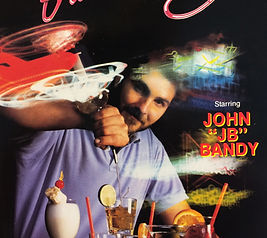
TGI Friday's produces a bartender training video featuring John “JB” Bandy, John Mescall, and “Magic” Mike Werner, then holds its first flair bartending competition, the Bar Olympics. Bandy wins.
Bartenders weren't just pouring bottles anymore.
They were throwing them.
Check my Flair Bartending page.
1987 — the Cosmopolitan travels from San Francisco to New York City
Patrick "Patty" Mitten says he first learned of the Cosmopolitan from his manager at the Patio Cafe in San Francisco.
In 1987, he moved to NYC and took a bartending job at the Life Cafe. There he shared the Cosmo with
co-workers, Melissa Huffsmith and Peter Pavia. Read the story on my Cosmopolitan Cocktail History page.
1988 — ABSOLUT CITRON
Absolut Citron, a lemon-flavored vodka that would become Absolut's best-selling flavored vodka and play an important role in one of the most famous cocktails of the next decade: the Cosmopolitan.
The Cosmopolitan already had several evolutionary ancestors and competing origin stories, but Citron became an important part of
the drink's modern history. Around this same period, versions of the Cosmo appeared using the new citrus vodka, cranberry, lime,
and orange liqueur.
By the 1990s, the combination of Absolut Citron and the Cosmopolitan helped propel both flavored vodka and the pink cocktail into mainstream bar culture.
Absolut gave vodka a lemon. Bartenders gave the world a pink Martini glass.
1988 — COCKTAIL
Tom Cruise stars in Cocktail, with John JB Bandy serving as his flair instructor. The movie helps ignite flair bartending around the world.
For the next several years, bartenders everywhere discovered that management gets nervous when you throw their liquor inventory in the air. So while bartenders were tossing bottles in the air and Tom Cruise was making bartending look like an aerobics class with liquor, the country was fundamentally changing its relationship with alcohol, driving, and sex.
1988 — SOMETHING ELSE IS HAPPENING
While flashy cocktails dominate popular culture, bartender Dale "King Cocktail" DeGroff begins taking a more culinary,
fresh-ingredient approach at New York's Rainbow Room.
It didn't look revolutionary yet.
But a seed had been planted.
1989 — the Cosmopolitan travels from the Life Cafe to the Odeon in NYC and the Miami Beach Cosmopolitan is created
Melissa Huffsmith introduces the Cosmopolitan to her manager at The Odeon in New York City in the spring. In March, bartender Cheryl Cook creates her Cosmopolitan at The Strand in Miami Beach, Florida.
Read the story on my Cosmopolitan Cocktail History page.
The 1980s cocktail may have looked like a party in a glass, but there was a lot more
going on underneath the little paper umbrella.
1990s — THE COCKTAIL STARTS REMEMBERING ITS PAST
Cocktail history takes a quiet but important turn in the 1990s. While flavored Martinis and vodka drinks dominated mainstream bars, a small group of bartenders began rediscovering fresh citrus, classic recipes, forgotten spirits, proper technique, and quality ingredients.
Meanwhile, California's 1998 smoking ban had bar people convinced the business was doomed, and by decade's end everyone behind the bar was bracing for Y2K, wondering if the registers would even work at midnight.
The Second Golden Age was quietly warming up.
Early 1990s—Dale "King Cocktail" Degroff popularized his own version of the cosmopolitan
Dale DeGroff learned of the Cosmopolitan at San Francisco’s Fog City Diner and brought it to New York’s Rainbow Room. His recipe used two ounces of cranberry juice, producing a deeper-red cocktail. This deeper-red style of Cosmopolitan is the version later seen on the TV show, Sex and the City. In 1994, The Central New Jersey Home News published DeGroff's Cosmopolitan recipe , calling for two ounces of cranberry juice, making a distinctly red cocktail. In addition, Bob Sennett’s 1993 Complete World Bartender Guide mentions the Cosmopolitan, and its recipe produces a red cocktail.
Read the story on my Cosmopolitan Cocktail History page.
1991 — COCKTAILS MEET THE INTERNET
Chuck Rohm sold a flair-bartending VHS on bottlesup.com.
A cocktail website. Imagine that catching on.
1992–1995 — THE CRAFT SEEDS SPREAD
Bartenders and writers such as Paul Harrington, Dale DeGroff, Steve Olson, Gary Regan, Jared Brown and Anistatia Miller,
help revive interest in classic drinks and fresh ingredients. Cocktail websites also begin appearing on the young World Wide Web.
Check my First Bar & Cocktail Websites page.
The revolution wasn't happening everywhere yet.
But bartenders were beginning to ask dangerous questions like:
“What if we used fresh lemon juice?”
1996 — The movie Swingers prominently features classic cocktails and quality spirits, while bars such as Cleveland's Velvet Tango Room, founded by Paulius Nasvytis, embrace a more traditional cocktail approach.
1997–1998 — COCKTAIL MEDIA EXPLODES
Books, magazines, television, and the Internet increasingly focus on cocktails. Paul Harrington and Laura Moorhead publish the influential Cocktail: The Drinks Bible for the 21st Century, while fresh-classic bars emerge in Boston and Las Vegas.
And on a side note, California becomes the first state to ban smoking in bars—just in time for the fresh-cocktail movement. Because if you're going to grow mint on the windowsill, it's probably best not to smoke it before it reaches the Mojito.
And then television changes one particular cocktail forever.
1998 — SEX AND THE CITY MEETS THE COSMO
The Cosmopolitan appears on television and then lands in the hands of Carrie Bradshaw and friends on HBO's Sex and the City. By 1999, the Cosmo appears repeatedly on the show and becomes a worldwide sensation.
Four women walk into a bar...
…and suddenly every bartender on Earth needs cranberry juice.
Read the story on my Cosmopolitan Cocktail History page.
1999 — PARTY LIKE IT'S 1999 — MILK & HONEY
On New Year's Eve, Sasha Petraske opens Milk & Honey in New York City, an enormously influential moment in the emerging craft cocktail movement.
Meanwhile, the mainstream cocktail world is awash in Cosmopolitans, flavored Martinis, flavored vodkas, and Martini bars with menus containing hundreds of drinks.
Two cocktail worlds were now running simultaneously.
One was asking:
“What obscure pre-Prohibition bitters did Jerry Thomas use?”
The other was asking:
“Can you make my Martini taste like birthday cake?”
And somewhere between the two, the seeds of the Second Golden Age of Cocktails had officially taken root.
Next stop: the 2000s—when bartenders rediscover history, fresh ingredients return, speakeasies multiply, ice cubes become enormous, and suddenly everybody owns a bottle of bitters nobody had heard of ten years earlier.
2000–Present Craft, COVID & Cocktails in the Digital Age
Modern cocktail history really begins here. The new millennium opened with Appletinis, flavored vodkas, Mojitos, and bartenders dancing on bars—but underneath all that sweet-and-sour mix, something important was happening.
Bartenders began digging through old cocktail books, squeezing fresh citrus again, making their own syrups and bitters, obsessing over ice, rediscovering forgotten spirits, and treating bartending as a profession worth studying.
Read my Cocktail Renaissance Timeline 1980s-2010.
Between 2000 and 2010, America's modern craft-cocktail movement went from a handful of pioneering bars to an international movement. By the 2010s, a bar no longer needed suspenders, handlebar mustaches, Edison bulbs, and a secret entrance to make a great cocktail.
Thank God. We were running out of telephone booths to hide doors behind.
Vodka: straight‑up/stirred drinks like Martini, Vodka Martini, Dirty Martini, Wet Martini, Half & Half Martini, Chocolate Martini, Espresso Martini, Appletini, Lemon Drop Martini, Porn Star Martini, and Breakfast Martini; sours and shakes such as Cosmopolitan; highballs and long drinks including Screwdriver, Vodka Cranberry (Cape Codder with a lime garnish), Vodka Red Bull, Vodka Soda Spritz, Moscow Mule, and Bloody Mary (plus make‑your‑own Bloody Mary bars).
Gin: Negroni, White Negroni, and Kingston Negroni; sours and shakes including Gin Basil Smash and Amaretto Sour (plus Jeffrey Morgenthaler’s version); highballs and long drinks such as Gin‑Gin Mule, Aperol Spritz, and French 75; and modern signatures like Aviation, Last Word, Paper Plane, Naked and Famous, Final Ward, Division Bell, Remember the Alimony, French Pearl, Gin Blossom, and Chartreuse Swizzle.
Whiskey (Bourbon / Rye / Scotch / Irish): Old Fashioned, Brown Sugar Old Fashioned, Benton’s Old Fashioned, Oaxaca Old Fashioned, Manhattan, Black Manhattan, Revolver, and Boulevardier; sours and shakes including Whiskey Sour, New York Sour, Gold Rush, Amaretto Sour, Jeffrey Morgenthaler’s Amaretto Sour, and Trinidad Sour; highballs and long drinks such as Highballs (generic), Irish Coffee, Frozen Irish Coffee, and Kentucky Mule; and modern signatures like Penicillin, Final Ward, Death Flip and Paper Plane.
Rum: Daiquiri, Strawberry Daiquiri, and Bay Leaf Daiquiri; highballs and long drinks such as Dark ’n’ Stormy; tropical/frozen classics including Mojito, Mai Tai, Zombie, Piña Colada, Hurricane, and Painkiller.
Tiki / Tropical (1900s Classics That Remained or Became Popular Again in 2000–2026): Mai Tai (1930s–1940s), Jungle Bird (1970s), Three Dots and a Dash (1940s), Navy Grog (1930s–1940s), Saturn (1960s), Jet Pilot, Test Pilot, and Fog Cutter (1940s–1950s).
Tiki / Tropical (2000–2026 Creations Only): Artichoke Hold, Absinthe Colada, Brancolada, Fay Wray, Wormhole, Slice of Paradise, Fortress of Solid Dudes, and Dive Simulation. Bars such as False Idol, push the ube style with ingredients like taro, pandan, mango sticky rice, cultured nut butters, and other contemporary techniques.
Tequila / Mezcal: Margarita, Tommy’s Margarita, Mezcal Margarita, Spicy Margarita, Creamsicle Margarita, Ranch Water, Paloma, and Siesta; highballs and long drinks such as Tequila Sunrise, Paloma, and M&M (Mezcal & Amaro); and modern signatures including Oaxaca Old Fashioned, Division Bell, Naked and Famous, Siesta, Rosita, Piña Verde, and Death Flip.
Other (Brandy, Cognac, Chartreuse, Multi‑spirit, etc.): Brandy Alexander; sours and shakes such as Pisco Sour and a generic “Sours with or without fresh egg white” entry; and modern signatures like Corpse Reviver No. 2, Old Cuban, Gold Rush, Jungle Bird, Remember the Alimony, French Pearl, Gin Blossom, Piña Verde, and Death Flip.
Zero‑proof: Non‑alcoholic versions of stirred drinks, sours, highballs, spritzes, mules, tropical/frozen drinks, and modern signature zero‑proof cocktails.
In addition: Barrel‑aged cocktails, clarified cocktails, cocktails made with Super Juice, kegged or tap‑served cocktails, fat‑washed cocktails, smoked cocktails (using tableside smoke, smoked ice, or smoked syrups), frozen and blended cocktails with slushie or granita textures, nut‑syrup‑forward drinks built around orgeat and similar syrups, sherry‑ and fortified‑wine‑forward cocktails, and bitter‑forward, amaro‑heavy cocktails.
This Monster List makes an important point: everything survived. The Manhattan didn't disappear when the Cosmopolitan arrived. The Cosmopolitan didn't disappear when the Paper Plane flew in. The Old Fashioned, Martini, Daiquiri, Negroni, Margarita, and dozens of other cocktails simply kept making room for the newcomers. Some drinks disappeared for a while and came back. Others were reinvented, rediscovered, or given a modern twist. And entirely new cocktails earned places beside drinks more than a century old. Instead of replacing its past, cocktail culture just kept adding to it.
That's what I love about following cocktail history through a timeline. One drink leads to another, one bartender inspires another, old ideas become new again, and eventually you can see how all the dots connect. Today, we have more than two centuries of cocktails standing side by side on the same bar—and somehow, there's still room for whatever flies in next. ✈️🍸
Milk & Honey, Pegu Club, Flatiron Lounge, Smuggler’s Cove, Latitude 29, Happy Accidents, Jewel of the South, The Pour House, Death & Company, On the Rocks, Hop Sing Laundromat, Double Chicken Please, The Brotherhood of Thieves, PDT (Please Don’t Tell), The Dead Rabbit, Attaboy, Katana Kitten, Sip & Guzzle, Anvil Bar & Refuge, Best Intentions, Bar Tonique, Gold Clover Bar, Trick Dog, Herbs and Rye, Dante, Employees Only, Artesian, Drink, The Connaught Bar, Vessel, The Varnish, The Office, Downtown Bar & Grill, The Dugout, The Locker Room, The Billy Goat, The Thirsty Monk, The Apothecary Bar, Remedy Room, Mai-Kai, Three Dots and a Dash, UnderTow, False Idol, The Edison, The NoMad Bar, The Franklin Mortgage & Investment Co., The Laundry Room, Midnight Cowboy, Williams & Graham, Bourbon & Branch, and Needle & Thread.
Crunk, turnt, lit, gone, twisted, buzzed, tipsy, feeling it, wasted, hammered, plastered, smashed, tanked, trashed, blitzed, bombed, fried, juiced, toasted, canned, loaded, sloshed, liquored up, and pissed.
So far, the century has brought brands including: Cîroc vodka, Many Absolut vodka flavors, Many Stoli vodka flavors, Many Smirnoff vodka flavors, Many Grey Goose vodka flavors, Many Bacardi rum flavors, Many Baileys Irish Cream flavors, Tanqueray No. Ten, Don Julio 1942, Fireball Cinnamon Whisky, Red Stag black cherry Bourbon, Maker's Mark 46, Elijah Craig Barrel Proof, WhistlePig Rye, Angels Envy, High West whiskey, and my personal favorite, Masterson’s 10 Year Rye.
Rothman & Winter: Crème de Violette, St. Elizabeth Allspice Dram, Velvet Falernum, Batavia Arrack van Oosten & more,
St-Germain Elderflower Liqueur, Domaine de Canton Ginger Liqueur, Hendrick’s gin original: Hendrick's Orbium, Hendrick's Kanaracuni, Hendrick's Neptunia, and Hendrick's Grand Cabaret, Cocchi Americano: Cocchi Vermouth di Torino 'Storico', Cocchi Rosa, & Cocchi Dopo Teatro, Hayman's Old Tom gin, Ransom Old Tom gin, Tanqueray Old Tom, Citadelle No Mistake Old Tom, Bols Genever, Mr. Black coffee liqueur, Cynar, Reyka vodka, The 86 Co: Fords Gin, Aylesbury Duck, Cana Brava, and Tequila Cabeza
Tempus Fugit brand liqueurs: Crème de Banane, Crème de Noyaux, & more, Plantation/Planteray Rums: Plantation Pineapple Stiggins' Fancy, Cut & Dry Coconut, & more, White Claw hard seltzer, Truly hard seltzer, Pierre Ferrand Dry Curaçao, Hamilton Rums: Hamilton Demerara 86 Proof, Hamilton Jamaican Pot Still Black, & more, Hochstadter's Slow & Low Rock & Rye, Ancho Reyes Chili liqueur,
Chareau aloe liqueur, Absinthe: Lucid Supérieure, Kübler, Pernod, & more, Several Amaros, Sipsmith Gin & Sipsmith Sloe Gin (first zero-proof 2013), Zero-Proof: Ritual, De Soi, Everleaf, & more.
Buffalo Trace Antique Collection: Eagle Rare 18yr, Sazerac 17yr, William Larue Weller 19yr, George T. Stagg, & Thomas H. Handy Sazerac Rye & Sazerac 18-Year-Old Rye, Wild Turkey Master's Keep & Wild Turkey Master's Keep Bottled-in-Bond, Bulleit Bourbon, Bulleit Rye, & Bulleit 20-Year-Old Rye, Russell's Reserve 13 Year, Jack Daniel's 10 Year Old, Old Forester Parson's First Whiskey, Hudson Baby Bourbon, Garrison Brothers bourbon, Jameson Irish whisky additions: Jameson Black Barrel, Jameson Stout Caskmates, Jameson Orange, & more,
Rumchata, Jefferson’s Bourbon: Jefferson's Ocean Aged at Sea (first Bourbon to be aged on ships traversing the seas), Jefferson's Presidential Select, & more, and Celebrity brands: Casamigos Tequila - George Clooney, Sauza 901 Tequila - Justin Timberlake, Thunderstruck Tequila - AC/DC band, Crystal Head Vodka - Dan Aykroyd, Teremana Tequila – "The Rock" Johnson, Old Whiskey River Bourbon - Willie Nelson, Aviation American Gin - Ryan Reynolds.
2000 — COYOTE UGLY
The film Coyote Ugly hits theaters, showing scantily clad bartenders dancing on the bar, slinging drinks, breathing fire, and generally doing everything except ringing in drink orders correctly.
Suddenly, bartending looked like a combination of nightclub, rodeo, and gymnastics.
2002 — THE MOJITO EXPLODES
James Bond strikes again. In Die Another Day, Pierce Brosnan hands Halle Berry a Mojito in Cuba, helping revive the classic worldwide.
Almost overnight, bartenders everywhere began hearing:
“Can I get a Mojito?”
Unfortunately, bartenders everywhere responded:
“Does anyone know where we keep the mint?” Probably 10 bars in America had fresh mint.
That same year, Dale DeGroff publishes The Craft of the Cocktail, and Tales of the Cocktail launches in New Orleans—two major milestones in America's cocktail renaissance.
2003–2006 — CRAFT COCKTAILS SPREAD
Influential craft bars open around the country, including Flatiron Lounge, Pegu Club, Little Branch, and Vessel. Cocktail books, magazines, classes, festivals, and online education spread knowledge faster than ever before.
Bartenders begin talking about fresh juice, homemade syrups, obscure bitters, proper dilution, forgotten classics, and perfectly clear ice.
Customers begin wondering why their drink is taking twelve minutes.
2007 — ABSINTHE RETURNS
After being unavailable in the United States for nearly a century, absinthe legally returns to American shelves.
The television series Mad Men also debuts, helping renew popular interest in classic cocktails, while influential bars such as PDT push cocktail creativity forward.
The Old-Fashioned suddenly becomes cool again.
Don Draper accomplished what 100 years of bartender manuals couldn't.
2008–2009 — THE CRAFT MOVEMENT GROWS UP
The Sazerac becomes the official cocktail of New Orleans, Clover Club opens in Brooklyn, Cocktail Kingdom begins selling high-quality professional bar tools, and Los Angeles gets influential craft bar The Varnish.
Cocktail bars are no longer a quirky little movement. Something bigger is happening.
2010s — THE SECOND GOLDEN AGE HITS ITS STRIDE
By 2010, cocktail history was entering its Second Golden Age in earnest. Bartenders experimented with barrel-aged cocktails, molecular techniques, mezcal, house-made bitters, shrubs, premium vermouth, tiki, and elaborate ice.
In other words, bartenders had discovered about 47,000 ways to make drinking more complicated.
2011 — THE OLD-FASHIONED IS COOL AGAIN
Ryan Gosling makes an Old-Fashioned in Crazy, Stupid, Love, further boosting the drink's revival.
The all-female cocktail competition Speed Rack also launches.
Angel's Envy Bourbon launches.
2013 — 2014 — COCKTAILS BECOME SERIOUS BUSINESS
Bottled craft cocktails appear, cocktail books become major publishing successes, celebrities enter the spirits business, and bars increasingly borrow techniques from professional kitchens.
Bartenders aren't just squeezing lemons anymore.
They're infusing, dehydrating, clarifying, smoking, fat-washing, barrel-aging, centrifuging, and occasionally making you wonder whether you accidentally walked into a laboratory.
2015–2016 — CRAFT BECOMES MAINSTREAM
The craft cocktail movement spreads beyond a small group of elite bars. Over 1,000 bars in America have gone fresh. Better cocktails begin appearing in neighborhood restaurants, hotel bars, casual establishments, and cities far beyond New York, San Francisco, London, and New Orleans.
Major books document the movement, including Robert Simonson's A Proper Drink, while books from influential bars and bartenders preserve modern cocktail techniques for another generation.
The original goal of the craft pioneers was finally happening:
A good cocktail didn't have to be a “craft cocktail.” It could just be a cocktail made correctly.
2017–2019 — STRAWS, INSTAGRAM & THE EXPERIENCE ERA
Cocktail history meets social media in this stretch. Instagram helps turn elaborate garnishes, dramatic glassware, smoke, flames, flowers, and photogenic presentations into powerful marketing tools.
Customers don't just drink the cocktail anymore.
The cocktail gets a photo shoot first.
At the same time, sustainability becomes a much larger industry conversation. Bars experiment with reducing waste, eliminating single-use plastic straws, composting ingredients, reusing citrus and kitchen scraps, and creating lower-waste cocktail programs.
Bartenders also increasingly discuss issues beyond recipes—mental health, substance abuse, workplace culture, diversity, inclusion, harassment, career longevity, and whether working yourself into the ground really makes you a better bartender.
The profession is growing up.
2020 — COVID CHANGES EVERYTHING
One of the strangest chapters in recent cocktail history: in early 2020, COVID-19 shuts down bars and restaurants around the world.
For bartenders, owners, servers, cooks, distributors, liquor brands, musicians, and countless hospitality workers, it is devastating.
But the industry does what hospitality people have always done:
It improvises.
Bars begin selling cocktails to-go, bottled cocktails, cocktail kits, family meals, virtual tastings, online cocktail classes, and anything else that might keep the doors from closing permanently.
Industry education moves online. For the first time in its 18-year history, Tales of the Cocktail becomes completely digital, with seminars, panels, mentorship, education, and events available online to a worldwide audience.
A bartender could suddenly attend a cocktail seminar in New Orleans while sitting on the sofa in pajamas. The commute was excellent.
THE QR CODE TAKES OVER
The humble QR code, invented decades earlier, suddenly becomes one of hospitality's favorite pieces of technology. Instead of touching a printed menu, guests scan a little black-and-white square with their phones and pull up the cocktail menu digitally.
Bars love that they can change prices and drinks without reprinting hundreds of menus.
Customers discover a new pre-dinner ritual:
“Honey, can you get this thing to scan?”
QR menus survive the pandemic and become commonplace in many establishments.
THE COCKTAIL TO-GO
One of COVID's biggest effects on American cocktail culture is the rapid expansion of cocktails-to-go.
Emergency rules in many states allow restaurants and bars to sell cocktails for takeout, giving struggling businesses another source of revenue.
What began as a temporary survival measure became popular enough that numerous jurisdictions later extended or permanently adopted some form of alcohol-to-go.
For the first time, your bartender could essentially say:
“Would you like a Margarita for the road?”
Legally.
2021 — THE INDUSTRY STARTS COMING BACK
Cocktail history's recovery era begins unevenly. Bars reopen as restrictions change from city to city.
And hospitality encounters another problem:
Where did everybody go?
Restaurants and bars struggle with staffing shortages as many experienced hospitality workers who left during the
shutdown simply don't return.
Tales of the Cocktail remains primarily digital in 2021, with limited in-person events. More than 6,700 attendees from
109 countries participate digitally.
The pandemic unexpectedly proves that cocktail education doesn't have to happen in the same room—or even the same country.
THE ESPRESSO MARTINI RETURNS
Another old drink comes roaring back: the Espresso Martini.
The cocktail becomes one of the defining drinks of the post-lockdown era.
Apparently, after surviving 2020, everyone decided they needed alcohol and caffeine simultaneously.
2022 — PEOPLE WANT TO GO OUT AGAIN
Cocktail history swings back toward experience in 2022. Cocktail bars rebound as customers return looking for something they couldn't reproduce at home: an experience.
Immersive bars, hidden rooms, theatrical presentations, elaborate glassware, tableside cocktails, rooftop bars, themed bars, and destination cocktail programs flourish.
At the same time, canned and bottled ready-to-drink cocktails (RTDs) continue expanding.
The line between bartender-made cocktail and packaged cocktail gets blurrier.
2022 — Harry Yee Dies at 104
Legendary Hawaiian bartender Harry Yee, creator of the Blue Hawaii, died on December 7, 2022, at the remarkable age of 104.
While bartending at the Hawaiian Village Hotel in Waikiki, Yee created at least 15 tropical cocktails, including the Blue Hawaii, Tropical Itch,
Hawaiian Eye, Guava Lada, Hot Buttered Okolehao, Scratch Me Lani, Catamaran, Naughty Hula, Hukilau, Diamond Head, Village Sunset,
and Wahine's Delight. He became known for imaginative garnishes that helped define the look of tropical drinks. His Tropical Itch even came with a bamboo back scratcher.
Yee originally garnished his Blue Hawaii with sugarcane, but guests chewed it and tossed the sticky remains into their ashtrays.
When I spoke with Harry in 2018, at age 99, he remembered the mess the cocktail servers had to clean up. So he replaced the
sugarcane with a Vanda orchid.
One of cocktail history's prettiest garnishes was apparently born because Harry Yee felt sorry for the cocktail servers.
PERSONAL NOTE: I'm especially grateful I found Harry when I did. What began as my search for an almost-forgotten bartender turned into years of conversations and birthday phone calls with a living piece of cocktail history. Not many people get to call the inventor of a famous cocktail and say, “Happy Birthday.” I got to do it more than once.
2023 — THE MOCKTAIL GROWS UP
A quieter but significant shift in cocktail history: non-alcoholic cocktails stop being an afterthought.
Instead of offering soda water with lime or a glass of cranberry juice, serious bars begin creating dedicated zero-proof cocktail menus using non-alcoholic spirits, bitters, teas, shrubs, botanicals, fermented ingredients, and sophisticated syrups.
The term “sober curious” becomes part of drinking culture, and Dry January continues gaining attention.
The change isn't simply abstinence. Many customers alternate between alcoholic and non-alcoholic drinks during the same evening.
Bartenders have found they can charge more than $3 for something without vodka.
2024 — DRINKING LESS BECOMES MAINSTREAM
Cocktail history takes an unexpected turn toward moderation. No- and low-alcohol drinking becomes one of the most important changes in modern beverage culture.
In the United States, no-alcohol volume had risen 29% in 2023 versus 2022, including growth in alcohol-free beer, wine, spirits, and RTDs.
Bars increasingly add sophisticated non-alcoholic sections to their menus.
Importantly, this doesn't necessarily mean everyone stopped drinking.
Consumers increasingly practice moderation—drinking fewer drinks, taking periodic breaks from alcohol, or alternating traditional cocktails with zero-proof ones.
The bartender's new question becomes:
“Would you like that with alcohol?”
Nobody in 1985 saw that coming.
2025 — ZERO-PROOF ISN'T A FAD
By 2025, this new chapter of cocktail history looks permanent. The no/low category is clearly becoming a lasting part of bar culture, with volume growing another 13% during 2024.
In the United States, no-alcohol spirits had achieved a five-year compound annual growth rate exceeding 60% through 2024.
Consumers also become more selective about when and how much they drink. Quality increasingly matters because for some guests, that cocktail may be the only alcoholic drink of the evening.
Which brings cocktail history around in a beautiful circle:
If you're only having one, make it a good one.
2026 — WHERE WE ARE NOW
Cocktail history today would look both familiar and completely bizarre to Jerry Thomas.
We still make Old-Fashioneds, Manhattans, Martinis, Sours, Juleps, Punches, Highballs, and Fizzes based on formulas bartenders have used for generations.
But today's bartender may also use QR menus, social media, online training, clarified juices, giant clear ice, house fermentation, draft cocktails, bottled cocktails, canned cocktails, non-alcoholic spirits, sustainable ingredients, reservation apps, and technology that didn't exist a generation ago.
No-alcohol drinks and newer “alcohol-adjacent” beverages continue expanding; industry research in 2026 projects continued global growth for both categories.
And yet after 10,000 years of humans fermenting things, hundreds of years of punch bowls, two Golden Ages, Prohibition, disco, flavored Martinis, a pandemic, and approximately seventeen million pictures of cocktails posted online, the most important part hasn't changed:
People don't really go to bars just to drink.
They go to celebrate, flirt, laugh, complain, meet people, hear stories, tell stories, escape, connect, and feel like they belong somewhere for a little while.
The tools change.
The drinks change.
Hospitality doesn't.
And somewhere right now, a bartender is making a drink that will probably end up in the 2100 Cocktail Timeline.
I won't be around to add it.
By 2060, I'll be gone, but hopefully this page won't be.
My hope is that someone in my family will pick up where I left off—adding the
new drinks, bartenders, bars, discoveries, inventions, and stories that haven't happened yet.
And when their time comes, maybe they'll pass it along to the next person.
I've tried to leave a little something behind for them, too.
I donated my collection of autographed cocktail books, along with a
10-year bar log documenting life behind a New Orleans French Quarter bar,
to the Museum of the American Cocktail collection in New Orleans (MOTAC),
so future bartenders and cocktail historians will have somewhere to
look back at a small piece of the history that came before them.
Because cocktail history doesn't end. We just take turns telling it.
Good to know: In 2026, the Southern Food & Beverage (SoFAB) Research
Center (includes MOTAC) relocated to the second floor of the Nunez Library on
Nunez Community College’s Chalmette campus in the Arts, Sciences and
Technology building.
Location: 3710 Paris Road, Chalmette, LA 70043.
Phone: (504) 278-6231 or (504) 278-6232.
Email: library@nunez.edu
Hours: Call or email for current hours.
WHAT are we DRINKING so far?
WHAT are THE BARS called so far?
HOW Do we SAY “DRUNK” so far?
WHAT is APPEARING ON THE BACKBAR so far?